Marketing

Digital Brand Visibility in AI Search
Marketing, BLOG

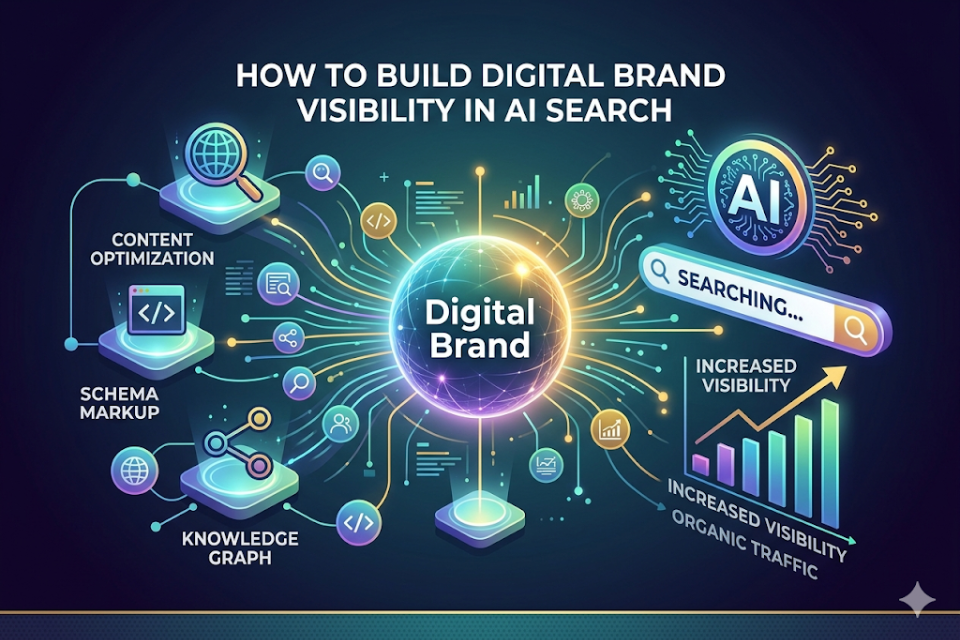
How to Build Digital Brand Visibility in AI Search

How to Build Digital Brand Visibility in AI Search   Artificial Intelligence is rapidly changing the way people search online. Instead of scrolling through multiple websites, users are now asking AI-powered platforms like ChatGPT, Google AI Overviews, Gemini, Perplexity, and Microsoft Copilot for direct answers, recommendations, and solutions. Because of this shift, businesses must rethink their SEO strategies and focus on improving digital brand visibility in AI search. Traditional SEO is no longer enough. Brands that want to stay visible in 2026 and beyond need content that AI systems can understand, trust, and recommend. In this guide, you’ll learn practical strategies to increase your brand visibility in AI-powered search engines and stay ahead of the competition. Get Help Your Business By Abhishek Singh Bartwal What Is AI Search? AI search refers to search experiences powered by artificial intelligence and machine learning. Instead of simply showing a list of links, AI search engines provide direct answers, summaries, and recommendations based on user intent. Examples of AI-powered search platforms include: Google AI Overviews ChatGPT Perplexity AI Microsoft Copilot Gemini AI These platforms analyze web content, authority signals, user behavior, and semantic relevance to generate responses. This means businesses now need to optimize content differently to improve digital brand visibility in AI search. You can also read : How Businesses Can Rank in AI Search in 2026: Complete Guide   Why Digital Brand Visibility in AI Search Matters AI search is changing how users discover brands online. If your business is not visible in AI-generated answers, you may lose traffic, authority, and potential customers. Here’s why it matters: 1. AI Gives Direct Recommendations Users increasingly trust AI-generated recommendations for products, services, and information. 2. Zero-Click Searches Are Increasing Google AI Overviews often answer user queries without requiring clicks to websites.     3. Brand Mentions Build Trust When AI tools repeatedly mention your brand, it strengthens authority and recognition. 4. AI Search Influences Buying Decisions Consumers now use AI assistants for: Product comparisons Local recommendations Service research Reviews and insights Improving digital brand visibility in AI search helps businesses stay discoverable where users are actively searching. You can also read : SEO vs Paids: Which Marketing Strategy Gives Better ROI in 2026?   How AI Search Engines Choose Which Brands to Recommend AI search systems do not randomly select brands. They evaluate multiple trust and authority signals across the internet. Key factors include: Website authority High-quality backlinks EEAT signals (Experience, Expertise, Authority, Trustworthiness) Fresh and relevant content Positive reviews Brand mentions on trusted websites Structured data and schema markup User engagement signals Brands that consistently provide valuable and trustworthy content are more likely to appear in AI-generated answers. Strategies to Build Digital Brand Visibility in AI Search 1. Create High-Quality EEAT Content   Google and AI systems prioritize content that demonstrates expertise and trustworthiness. To improve EEAT: Publish detailed guides Add expert insights Use real-world examples Include author bios Keep content updatedregularly Helpful, experience-driven content increases your chances of improving digital brand visibility in AI search. 2. Optimize for Conversational Search Queries People interact with AI search differently than traditional search engines. They use natural language questions. Example: Instead of: “best SEO tools” Users ask: “What are the best SEO tools for small businesses in 2026?” Tips: Use question-based headings Add conversational phrases Include long-tail keywords Write naturally for humans first This helps AI models better understand and surface your content. 3. Build Strong Brand Authority Across the Web AI platforms gather information from multiple trusted sources. Improve your authority through: Guest posting PR mentions Industry directories Podcasts LinkedIn articles Quora and Reddit participation The more trusted mentions your brand receives, the stronger your digital brand visibility in AI search becomes. 4. Use Structured Data and Schema Markup Schema markup helps AI and search engines understand your content better. Important schema types include: FAQ Schema Organization Schema Article Schema Review Schema Structured data improves content clarity and increases the chances of appearing in AI-generated summaries. 5. Focus on Semantic SEO Modern AI search relies heavily on semantic understanding instead of exact-match keywords. Semantic SEO includes: Topic clusters Internal linking Related entities Contextual relevance Instead of targeting a single keyword repeatedly, cover related topics naturally. For example, alongside digital brand visibility in AI search, include related terms like: AI SEO strategy AI-powered search engines Generative AI optimization AI search visibility 6. Create AI-Friendly Content Formats AI systems prefer content that is easy to scan and summarize. Best-performing formats: Step-by-step guides FAQs Bullet points Tables Definitions Comparison articles Well-structured content improves readability for both users and AI models. 7. Improve Technical SEO Technical optimization remains essential for AI visibility. Important technical SEO factors: Fast loading speed Mobile responsiveness HTTPS security Crawlable website structure Clean URLs Optimized metadata A technically strong website supports better indexing and visibility in AI search systems. 8. Leverage Social Media and Digital PR AI models often analyze web-wide popularity signals. Strong platforms for brand visibility: LinkedIn YouTube Twitter/X Medium Industry publications Consistent content distribution helps strengthen your online authority and improves digital brand visibility in AI search over time. Common Mistakes to Avoid Many brands struggle with AI visibility because they make avoidable SEO mistakes. Avoid: Thin AI-generated spam content Keyword stuffing Outdated information Poor user experience Lack of backlinks Ignoring EEAT principles Search engines and AI systems prioritize value, trust, and user satisfaction. Contact Us The Future of AI Search and Brand Visibility AI search is still evolving rapidly. Businesses that adapt early will gain a major competitive advantage. Future trends may include: More personalized AI search results Voice-based AI search growth Increased zero-click experiences AI shopping assistants Predictive recommendations Brands that invest in content quality, authority, and user experience will continue to improve their digital brand visibility in AI search. Conclusion The search landscape is changing faster than ever. AI-powered search engines are transforming how users discover brands, consume information, and make decisions online. To succeed in this new era, businesses must focus on creating trustworthy, valuable, and
Rank in AI Search
Marketing, BLOG

How Businesses Can Rank in AI Search in 2026: Complete Guide

How Businesses Can Rank in AI Search in 2026: Complete Guide The way people search online is changing faster than ever. Traditional search engines are evolving, and artificial intelligence is becoming a major part of how users discover information. Instead of simply showing a list of website links, AI-powered search experiences now generate summaries, recommendations, and direct answers. For businesses, this shift creates both opportunities and challenges. Companies that adapt early can gain a competitive advantage, while those relying only on traditional SEO methods may struggle to maintain visibility. If your goal is to Rank in AI Search, understanding how AI systems evaluate and recommend content has become essential in 2026. Unlike conventional SEO, AI search focuses heavily on content quality, context, trust, and user intent. Businesses now need strategies that help search systems understand not only keywords but also the complete meaning and value behind their content. Get Help Your Busniess By Abhishek Singh Bartwal  Understanding  the Rise of AI Search AI Search refers to search experiences powered by artificial intelligence technologies that analyze user intent and generate smarter results. Rather than relying only on keyword matching, AI systems evaluate context, relevance, and relationships between topics. Modern users increasingly prefer conversational search behavior. They ask complete questions and expect immediate answers. This means businesses must move beyond keyword-heavy pages and create content designed around real user needs. As AI-driven platforms continue to evolve, brands that create clear, authoritative, and helpful content are more likely to Rank in AI Search and improve their digital visibility. You can also read : SEO vs Paids: Which Marketing Strategy Gives Better ROI in 2026? Why Traditional SEO Alone Is No Longer Enough (And How to Rank in AI Search) Let’s be honest: the old SEO playbook is gathering dust. There was a time when you could “game” the system by sprinkling keywords across a page and buying a few links. But today? The search bar has evolved into a conversation engine. If you want to stay visible, you need to understand that the goal isn’t just to rank on page one anymore—it’s to Rank in AI Search. 1. From “Keywords” to “Conversations” Traditional SEO taught us to target phrases like “best coffee maker.” But AI engines like ChatGPT, Perplexity, and Google’s SGE (Search Generative Experience) don’t just look for those words. They look for the answer. To Rank in AI Search, your content needs to be structured as a solution to a problem. AI models prioritize “Entities”—the relationships between people, places, and facts. If your content is thin or repetitive, AI will simply skip over you. 2. The Death of the “Blue Link” We used to fight for the top blue link. Now, AI often summarizes the top results into a single paragraph at the very top of the page. This is a “Zero-Click” world. The Strategy: You need to be the source that the AI cites. How? Use clear, authoritative data and “Information Gain”—tell the reader something they haven’t heard a thousand times before. 3. Experience is the New Authority (EEAT) AI can aggregate facts, but it can’t tell you how a product felt in its hands or what it’s like to run a business for ten years. This is your secret weapon. Google and other AI-driven platforms are obsessed with Experience. To Rank in AI Search, you must include: Personal anecdotes. Real-world case studies. Original photos or unique data points. A “human” voice that shows there’s a real person behind the screen. 4. The “Search” is Everywhere People are searching on TikTok, YouTube, and Reddit. Traditional SEO often ignores these silos. But AI models are trained on this data. If people are talking about your brand on Reddit or watching your tutorials on YouTube, you are much more likely to Rank in AI Search because the AI recognizes you as a trusted authority across the entire web. The 2026 Checklist: How to Pivot If you want to move beyond basic SEO and actually dominate the new era of search, here is your roadmap: Stop Writing for Bots: If a human finds your article boring, an AI will find it useless. Write with personality. Answer the “Why” and “How”: Don’t just provide a list of facts. Explain the nuance. Optimize for Snippets: Use clear headings and concise summaries. AI loves to “scrape” well-organized data. Build a Brand, Not Just a Site: Authority comes from being mentioned in multiple places, not just having a fast website. Build Strong Topic Authority   One of the most effective ways to Rank in AI Search is by building topical authority. Instead of publishing isolated pages around individual keywords, businesses should create content ecosystems around related subjects. For example, a digital marketing consultant should not only publish content about SEO services. Supporting content around AI marketing trends, local SEO, content strategies, search updates, and case studies helps establish expertise. When search systems see comprehensive coverage around a topic, they gain stronger confidence in your website as a reliable source. You can also read : Milesweb coupon code – Discount code   Create Helpful and Experience-Based Content   Content quality matters more than ever. Businesses should focus on creating information that reflects real-world knowledge and practical insights. Generic articles often fail because they repeat information already available online. Content becomes stronger when it includes examples, observations, practical advice, and industry insights. Businesses that consistently publish original and useful information improve their chances to Rank in AI Search because AI systems prioritize value and relevance. Improve Content Structure and Readability   Content structure plays an important role in AI visibility. Well-organized information is easier for both users and AI systems to understand. Simple formatting practices can improve readability significantly: Use descriptive headings Keep paragraphs short Add bullet points where needed Use relevant subheadings Maintain logical content flow Include FAQs at the end A clean structure helps search systems understand relationships between sections and extract useful information more effectively. Technical SEO Still Supports AI Visibility   While content strategy

seovspaids
Marketing, BLOG

SEO vs Paids: Which Marketing Strategy Gives Better ROI in 2026?

SEO vs Paids: Which Marketing Strategy Gives Better ROI in 2026? Every business wants more traffic, better leads, and higher sales. But when it comes to digital marketing, one question always creates confusion — SEO vs Paids, which strategy actually gives better ROI?  Some businesses invest heavily in SEO to build long-term organic traffic, while others rely on paid ads for instant visibility and faster conversions. Both strategies work, but they deliver results in very different ways. If you’re trying to decide where to spend your marketing budget, this guide will help you understand the real difference between SEO vs Paids, their benefits, costs, and which strategy can help your business grow faster in 2026. Get Help your Business By Abhishek Singh Bartwal What is SEO? SEO (Search Engine Optimization) is the process of improving your website so it ranks higher on Google organically. Instead of paying for every visitor, SEO helps you attract traffic naturally through search engines. When people search for products, services, or information related to your business, SEO helps your website appear in front of them. SEO includes: Keyword optimization Content creation Technical website improvements Backlink building Mobile optimization Better user experience The biggest advantage of SEO is that it continues generating traffic even after the content is published. You can also read :  Why Your Bakery Needs a Website Benefits of SEO Long-term organic traffic Higher brand trust Better online visibility Lower long-term marketing cost Sustainable business growth Challenges of SEO Takes time to show results Requires consistent effort High competition in some industries SEO is not a quick solution, but businesses that invest in it properly often see long-term growth and consistent traffic. What are Paid Ads? Paid ads are online advertisements where businesses pay platforms like Google, Facebook, or Instagram to promote their products or services. Unlike SEO, paid ads can start generating traffic almost immediately. Popular paid advertising platforms include: Google Ads Facebook Ads Instagram Ads LinkedIn Ads YouTube Ads With paid advertising, businesses can target specific audiences based on: Location Interests Age Search behavior Devices This makes paid ads one of the fastest ways to generate traffic and leads online. Benefits of Paid Ads Instant visibility Quick lead generation Advanced targeting options Faster campaign scaling Easy performance tracking Challenges of Paid Ads Requires continuous spending Traffic stops when ads stop Competitive keywords can be expensive Poor campaigns can waste money quickly Paid advertising works best for businesses that want immediate results. SEO vs Paids: Understanding the Main Difference   The biggest difference between SEO vs Paids is simple. SEO focuses on long-term organic growth, while paid ads focus on immediate traffic and faster conversions. Here’s a simple comparison: Factor SEO Paid Ads Traffic Source Organic Paid Results Speed Slow Instant Cost Long-term investment Pay per click Sustainability Long-lasting Stops with budget Brand Trust Higher Moderate ROI Duration Long-term Short-term When comparing SEO vs Paids, businesses need to decide whether they want fast results or long-term growth. SEO vs Paids: Which Gives Better ROI? ROI (Return on Investment) is one of the biggest factors businesses consider while choosing a marketing strategy. The truth is, both SEO and paid ads can deliver excellent ROI when used correctly. However, the results depend on your goals, industry, and marketing budget. Why SEO Delivers Strong Long-Term ROI SEO is often considered one of the best long-term digital marketing investments. Once your website starts ranking on Google, it can continue bringing traffic and leads for months or even years without paying for every click. For example: A well-optimized blog can generate traffic daily High-ranking pages build authority Organic visitors often trust websites more than ads Over time, SEO usually becomes more cost-effective compared to paid advertising. SEO Works Best For: Startups Bloggers Local businesses Service providers Long-term brands Businesses focused on long-term growth often prioritize SEO because it builds sustainable visibility online. Why Paid Ads Deliver Faster Results Paid ads are perfect for businesses that need traffic immediately. Unlike SEO, you don’t have to wait months for rankings. You can launch a campaign today and start receiving visitors within hours. Paid advertising is especially useful for: Product launches Seasonal offers E-commerce sales Lead generation campaigns Competitive industries The biggest advantage of paid ads is speed. However, there’s one important thing to remember: When your ad budget stops, your traffic usually stops too. That’s why businesses often compare SEO vs Paids carefully before investing heavily in one strategy. Contact Us Should You Choose SEO or Paid Ads?   The answer depends on your business goals. Choose SEO if: You want long-term traffic You want sustainable growth You want better brand authority You prefer lower long-term marketing costs Choose Paid Ads if: You need quick results You want immediate leads You’re launching a new product You need fast visibility Many businesses start with paid ads for instant traffic while building SEO gradually for long-term success. Why Combining SEO and Paid Ads is the Smartest Strategy The best digital marketing strategy is often not choosing between SEO vs Paids, but combining both together. SEO helps build long-term authority, while paid ads generate immediate traffic and conversions. Using both strategies together can help businesses: Increase overall visibility Generate more leads Improve conversion rates Build stronger brand awareness Maximize marketing ROI For example: Paid ads can bring quick traffic to new pages SEO can continue generating traffic long after ads stop running This balanced approach often delivers the best results. Common Mistakes Businesses Make Many businesses fail because they don’t understand how SEO vs Paids actually work. 1. Expecting Instant SEO Results SEO takes time and consistency. 2. Running Ads Without Proper Strategy Poor targeting and weak landing pages waste ad budgets. 3. Ignoring Keyword Research Keywords are important for both SEO and paid advertising. 4. Depending Only on One Strategy Using only SEO or only paid ads can limit growth potential. A smart marketing strategy usually combines both. Final Thoughts on SEO vs Paids The debate around SEO vs Paids

Marketing

You’re Missing 80% of Local Customers Without This

You’re Missing 80% of Local Customers Without This Imagine this—your potential customers are searching for your services right now, just a few kilometres away… but they never find you. Instead, they end up choosing your competitor. Not because you’re not good enough, but because you’re invisible online. Sounds harsh? It’s the reality for businesses that ignore one powerful tool: Google My Business. What Is Google My Business & Why It Matters Google My Business (now known as Google Business Profile) is a free platform that helps your business appear in local search results, Google Maps, and “near me” searches. When someone searches for “best bakery near me” or “digital marketing agency “, Google shows a list of nearby businesses—this is where GMB plays a crucial role. If your business isn’t optimised or listed here, you’re literally missing out on a huge portion of ready-to-buy customers. Why You’re Losing 80% of Local Customers 1. You’re Not Showing in Local Searches Most users don’t go beyond the first page of Google. If your business isn’t listed on GMB, you won’t appear in the local 3-pack (top 3 results), which gets the majority of clicks. 2. No Trust Signals Customers trust businesses with reviews, ratings, photos, and updated information. Without a GMB profile, your business looks less credible compared to competitors. 3. Missed Mobile Traffic A huge percentage of local searches happen on mobile devices. Users want quick information—location, call button, directions—all of which GMB provides instantly. How Google My Business Drives Real Growth Increased Visibility Your business shows up in Google Maps and local search results, increasing your chances of being discovered. More Calls & Walk-ins With features such as “Call Now” and “Get Directions”, customers can instantly connect with your business. Better Conversion Rate People searching locally already have high intent. They’re not browsing—they’re ready to buy. Free Marketing Tool Unlike paid ads, GMB allows you to promote your business organically without spending money. How to Optimize Your GMB Profile Add accurate business details (name, address, phone) Upload high-quality images regularly Collect and respond to customer reviews Post updates, offers, and announcements Use relevant keywords in your description A well-optimised Google My Business profile can significantly boost your local rankings and customer engagement for your business. Final Thoughts If your business is not leveraging Google My Business, you’re leaving money on the table. In today’s digital-first world, visibility equals opportunity—and GMB is your gateway to capturing local demand. Consult the Best DM Consultant Today Want to rank your business on top of local searches and attract high-quality leads consistently? It’s time to take action. Partner with an expert who understands local SEO, GMB optimisation, and growth strategies tailored for your business. Consult the best digital marketing consultant  today and turn your local searches into real customers! FAQ 1. What is Google My Business, and why is it important? Google My Business helps your business appear in local search results and Google Maps, making it easier for nearby customers to find and contact you. 2. How does Google My Business help in getting more customers? An optimised Google My Business profile increases visibility, builds trust through reviews, and allows users to call or visit your business directly. 3. Is Google My Business free to use? Yes, Google My Business is completely free and acts as a powerful tool for local marketing without any advertising cost. 4. How can I optimise my Google My Business profile? You can optimise Google My Business by updating accurate business details, adding photos, collecting reviews, and posting regular updates. 5. Can Google My Business help my business rank higher on Google? Yes, a well-optimised Google My Business profile improves your chances of appearing in local search results and the top 3 listings (local pack).

Marketing

How Interior Designers Can Win High-Value Clients with Meta Ads – Insights from a Marketing Consultant In Dehra

How Interior Designers Can Win High-Value Clients with Meta Ads – Insights from a Marketing Consultant In today’s competitive digital landscape, interior designers are no longer relying only on referrals or word of mouth. A Marketing Consultant In Dehradun understands that Meta Ads (Facebook & Instagram Ads) can transform the way interior designers attract premium clients. By targeting the right audience, showcasing stunning project visuals, and running strategic ad campaigns, interior design businesses can generate high-quality leads and consistent project inquiries. This blog explains how Meta Ads work for interior designers and how a Marketing Consultant In Dehradun can help turn social media platforms into a powerful client acquisition channel. Why Interior Designers Need a Marketing Consultant + for Meta Ads Interior design is a highly visual industry, and platforms like Facebook and Instagram are perfect for showcasing creative work. However, running profitable ads requires strategic planning. A Marketing Consultant In Dehradun helps interior designers identify their ideal audience, design visually appealing ad creatives, and run targeted Meta campaigns that attract homeowners, property investors, and commercial project owners who are actively searching for design services. With the right ad strategy, interior designers can move beyond random reach and start generating qualified leads consistently. How a Marketing Consultant In Dehradun Builds a Winning Meta Ads Strategy Running Meta Ads is not just about boosting posts. A Marketing Consultant In Dehradun creates a complete funnel that converts viewers into potential clients. Key elements of a strong Meta Ads strategy include:  Ads are shown to people interested in home décor, architecture, luxury furniture, or property investment. Location targeting also ensures ads reach people in relevant cities. 2. Visual Storytelling Interior design projects look best through before-and-after transformations, project walkthroughs, and high-quality images 3. Lead Generation Campaigns Meta lead forms or landing pages capture inquiries from potential clients looking for interior design services. 4. Retargeting Campaigns  People who visited the website or engaged with previous ads are shown follow-up ads, increasing conversion chances.1. Audience Targeting Best Meta Ad Formats for Interior Designers A Marketing Consultant In Dehradun often recommends specific ad formats that work best for interior design businesses.   Carousel Ads  Perfect for showcasing multiple project images such as living rooms, kitchens, and bedrooms. Video Ads  Short videos showing project transformations or 3D design concepts perform extremely well. Before-After Ads  Transformation visuals instantly grab attention and build credibility. Lead Form Ads  These ads allow potential clients to submit their contact details without leaving the platform. Each format helps interior designers present their creativity while generating inquiries. H2: Budget Planning for Meta Ads by a Marketing Consultant In Dehradun Many interior designers believe advertising requires a large budget, but that is not always the case. A Marketing Consultant In Dehradun focuses on maximizing ROI rather than spending more money. Typical starting strategies include: >Testing ads with a small daily budget >Running multiple creatives to see which performs best >Optimizing campaigns based on engagement and lead quality Even with a moderate budget, interior designers can generate consistent leads when campaigns are properly optimized. H2: Common Mistakes Interior Designers Make with Meta Ads Without proper guidance, many businesses waste ad spend. A Marketing Consultant In Dehradun helps avoid these common mistakes: Targeting Everyone Instead of Ideal Clients Ads should focus on homeowners, newly married couples, real estate buyers, or commercial property owners. Low Quality Creatives Interior design ads must showcase professional images and videos. No Lead Funnel Running ads without a landing page or inquiry system results in lost leads. Ignoring Retargeting Many interested prospects need multiple touchpoints before making a decision. Avoiding these mistakes improves both ad performance and client conversions. H2: How Meta Ads Help Interior Designers Generate Premium Clients Interior designers often work on high-value projects, and Meta Ads can attract the right audience. A Marketing Consultant In Dehradun builds campaigns that highlight luxury designs, premium materials, and unique concepts. These campaigns help designers: Attract homeowners planning renovation projects Generate inquiries for new home interiors Build a strong online brand presence Connect with builders and property developers     With the right strategy, Meta Ads become a powerful growth engine for interior design businesses. H2: Conclusion Meta Ads have become one of the most powerful digital marketing tools for interior designers. With the right strategy, creatives, and targeting, businesses can generate high-quality leads and consistent project inquiries Working with a Marketing Consultant In Dehradun ensures that every advertising campaign is optimized for results. From audience targeting to ad creatives and lead funnels, expert guidance helps interior designers maximize ROI and build a strong client pipeline through Meta advertising. H2: FAQs Why should interior designers hire a Marketing Consultant In Dehradun for Meta Ads? A Marketing Consultant In Dehradun helps interior designers run targeted campaigns, optimize ad budgets, and generate qualified leads instead of wasting money on ineffective ads. Are Meta Ads effective for interior design businesses? Yes, Meta Ads work extremely well for interior designers because platforms like Facebook and Instagram allow businesses to showcase visuals and reach homeowners interested in design services. 3. What budget is required to start Meta Ads for interior designers? A Marketing Consultant In Dehradun usually recommends starting with a small testing budget and scaling campaigns once high-performing ads are identified. 4. Which type of Meta Ads work best for interior designers? Carousel ads, video ads, and before-after transformation ads work best because they visually highlight interior design projects. 5. How long does it take to get leads from Meta Ads? With targeting and campaign optimization by a Marketing Consultant In Dehradun, interior desigproper ners can start receiving inquiries within a few days of launching ads.

Marketing, BLOG

Milesweb coupon code – Discount code ​

Are you searching for the latest MilesWeb Coupon Code for 2026 to launch your website? You have come to the right place.

Here, you will find verified and effective MilesWeb discount coupons that unlock significant savings on high-performance hosting plans, free domains, and essential website tools.

Whether you are starting a blog, building a business website, or opening an online store, these exclusive MilesWeb offers let you leverage LiteSpeed servers and premium features at the most competitive prices.

Scroll to Top