Author name: contactabhisheksbm@gmail.com

How to Generate Leads Online
BLOG

How to Generate Leads Online: 7 Strategies for Small Businesses

How to Generate Leads Online: 7 Strategies for Small Businesses Getting new customers is one of the biggest challenges for small businesses. You may have good products, quality services, and an experienced team, but without regular customer enquiries, growing your business can become difficult. Today, people search on Google, social media, and other online platforms before making a buying decision. This gives small businesses a great opportunity to reach potential customers without spending a huge amount on marketing. But how can you turn online visitors into actual customers? In this blog, we will discuss 7 effective ways to generate leads online for small businesses. 1. Build a Professional Business Website Your website is one of the most important tools for generating online leads. It gives potential customers information about your business, products, services, and contact details. A good business website should include: Clear information about your products and services. Simple contact and enquiry forms. WhatsApp and call buttons. Customer reviews and testimonials. Mobile-friendly design. Make sure visitors can easily understand what you offer and how they can contact you. Read More: Will AI Replace SEO? The Truth Every Business Owner Should Know 2. Use SEO to Get Leads from Google Search Engine Optimization (SEO) helps your website appear in Google search results when people look for products or services related to your business. For example, if you run a digital marketing company, you may want your website to appear for searches like “digital marketing services near me” or “SEO company in Dehradun”. To improve your website’s SEO: Use relevant keywords in your website content. Write helpful blogs related to your industry. Optimize page titles and meta descriptions. Improve website loading speed. Create separate pages for your important services. SEO takes time, but it can help your business attract customers who are already searching for what you offer. 3. Optimize Your Google Business Profile If you run a local business, Google Business Profile can be a valuable source of leads. It helps your business appear in Google Maps and local search results when nearby customers search for your services. Start by: Adding your correct business name and address. Selecting the right business category. Uploading real business photos. Adding your phone number and website. Sharing regular business updates. Asking happy customers to leave Google reviews. An updated profile makes it easier for people to find your business, call you, and visit your location. Let’s Discuss Your Project 4. Generate Leads Through Social Media Marketing Social media platforms like Facebook, Instagram, and LinkedIn help small businesses connect with potential customers. However, simply posting pictures or promotional messages is not enough. Your content should provide value and encourage people to take action. Here are some content ideas: Share customer success stories. Post product demonstrations. Create short educational videos. Share customer reviews. Answer common questions. Promote special offers. You can also use social media advertising to reach people based on their location, interests, and behaviour. 5. Run Google Ads and Meta Ads If you want to generate leads faster, paid advertising can help. Google Ads allows your business to appear when people search for specific products or services. Meta Ads help you reach potential customers through Facebook and Instagram. For better results: Target the right audience. Use clear and attractive ad creatives. Write simple advertising messages. Create dedicated landing pages. Add enquiry forms or WhatsApp buttons. Track calls, enquiries, and conversions. Start with a manageable budget, test different campaigns, and increase spending on the ads that bring quality leads. 6. Use Email Marketing to Build Customer Relationships Not every visitor will become a customer immediately. Some people need more information or time before making a decision. Email marketing helps you stay connected with these potential customers. You can use emails to: Share useful business information. Introduce new products and services. Send special offers. Share company updates. Follow up with previous enquiries. Avoid sending too many promotional emails. Focus on useful information that gives people a reason to stay connected with your business. 7. Create Helpful Content That Builds Trust People are more likely to contact a business when they trust its knowledge and experience. Content marketing helps you build that trust by answering customer questions and solving their problems. You can create: Informative blog posts. How-to guides. Industry tips. Frequently asked questions. Case studies. Short videos and tutorials. For example, if you run an interior design business, you can publish blogs about modern home designs, modular kitchens, and home renovation costs. Helpful content attracts the right audience and gives potential customers more reasons to choose your business. How I Can Help Your Business Generate Quality Leads Online Generating leads online is not just about running advertisements or getting more visitors to your website. It requires a clear understanding of your target audience, the right marketing channels, and a strategy that converts potential customers into actual business enquiries. I’m Abhishek Singh Bartwal, a Digital Marketing Consultant with over 9 years of experience in helping businesses build their online presence and generate measurable results. Over the years, I’ve worked with 100+ brands across India and internationally, helping startups, local businesses, e-commerce companies, B2B consultancies, and established organisations improve their digital marketing performance. My experience includes SEO, Website Development, Performance Marketing, Content Strategy, Google Ads, Meta Ads, and Local SEO. Read More: How to Make Your Website Visible in ChatGPT, Google AI Overviews and Gemini How I Help Businesses Generate More Leads Every business has different customers, challenges, and growth objectives. That’s why I don’t believe in using the same marketing strategy for every business.Instead, I focus on understanding your business first and then developing a digital marketing strategy that supports your actual goals. Here’s how I can help: 1. SEO for Consistent Organic Leads I help businesses improve their Google search visibility through keyword research, website optimization, content marketing, technical SEO, and local SEO. The goal is to attract people who are already searching for your products or services. 2. Google Ads for High-Intent Customers With
BLOG

Will AI Replace SEO? The Truth Every Business Owner Should Know

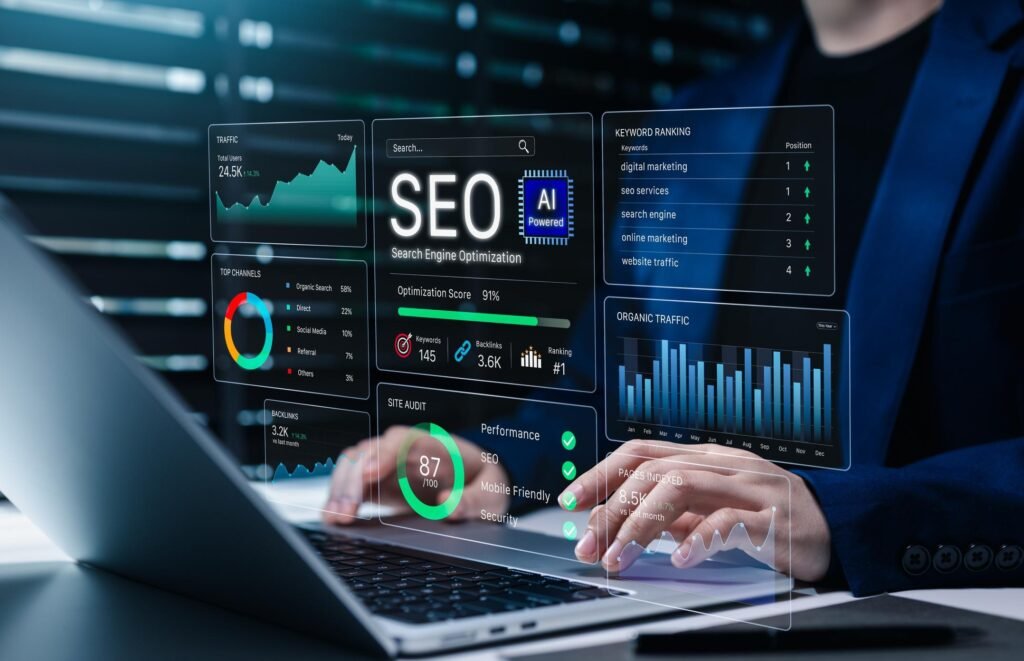
Will AI Replace SEO? The Truth Every Business Owner Should Know Artificial Intelligence is changing almost every part of digital marketing. From content creation and keyword research to customer communication and online search, AI tools are helping businesses complete tasks faster than ever before. Platforms like ChatGPT, Google Gemini, Perplexity and Google’s AI Overviews are also changing how people discover information online. Earlier, someone looking for a product or service would usually search on Google, visit different websites, compare options and make a decision. Today, users can simply ask an AI tool a detailed question and receive an instant answer. This change has created an important question for business owners: Will AI replace SEO, or will businesses still need search engine optimisation in the future? If you are investing in SEO, running an online business or planning to improve your website’s visibility, understanding this change is important. The reality is that AI is not making SEO irrelevant. It is changing how SEO works, which activities can be automated and what businesses need to focus on to remain competitive. Let’s understand what is actually happening and what you should do next. 1. Why Is Everyone Talking About AI Replacing SEO? The growing popularity of AI-powered search tools has created uncertainty in the digital marketing industry.People are using ChatGPT and Gemini to research products, find recommendations, understand complicated topics and compare services.At the same time, Google is introducing AI-powered features that provide summarised answers directly within search results.This has changed the traditional search experience. For example, earlier a user might search: “Best website development company in Delhi”Now, the same person might ask:“Which website development company should I choose for a small business website with an affordable budget?”The second question provides more context about the user’s requirements.AI tools can use that context to generate more detailed responses and, where supported, provide relevant website references.For businesses, this means online visibility is no longer limited to traditional Google rankings.However, it does not mean SEO has stopped working. It means businesses need to understand how customers discover information across different platforms. Read More: How to Make Your Website Visible in ChatGPT, Google AI Overviews and Gemini 2. What Can AI Actually Replace in SEO? AI is already changing the way SEO professionals handle everyday tasks. Several activities that previously required significant manual effort can now be completed faster with AI assistance. Here are some examples. Keyword Research and Keyword Clustering AI tools can analyse large keyword lists, identify related search terms and group keywords based on common topics and search intent. This helps SEO professionals organise their content strategy more efficiently. However, selecting the right keywords still requires understanding the business, target audience, competition and conversion opportunities. Content Outlines and First Drafts AI can generate blog outlines, suggest headings, create initial drafts and recommend relevant questions to cover. But automatically generated content still needs fact-checking, editing, original insights and a clear understanding of the audience. Meta Titles and Meta Descriptions AI can suggest SEO titles, meta descriptions and URL structures based on a target keyword. This saves time, but a human should review the final output to make sure it accurately represents the page and encourages users to click. SEO Reporting and Data Analysis AI can help organise SEO reports, identify performance patterns and summarise information from different datasets. It can make reporting easier, but interpreting the data and deciding which actions will improve business results still require professional judgement. The important difference is that AI can automate individual SEO tasks, but it does not automatically replace the complete SEO strategy. Consultant Your Business 3. What AI Cannot Replace in SEO Although AI tools are becoming more advanced, successful SEO involves several responsibilities that go beyond generating text or analysing keywords. Understanding Real Customer Behaviour Every business has a different audience. A person searching for a luxury property, a medical service or an affordable website development package has different expectations and purchasing behaviour. Understanding these differences requires customer research, industry knowledge and business experience. AI can help analyse information, but businesses still need to make decisions based on their actual customers. Building a Unique Brand Identity Your brand is more than the content published on your website. It includes your experience, reputation, customer relationships, services and the way people recognise your business. AI can help create marketing material, but it cannot automatically build a genuine reputation for your company. Developing a Long-Term SEO Strategy SEO is not a one-time activity. It requires continuous planning, competitor analysis, technical improvements, content development and performance monitoring. A business needs to decide which pages should be prioritised, which keywords have commercial value and where marketing resources should be invested. These decisions require more than automated recommendations. Creating Real Experience and Original Insights One of the biggest problems with mass-produced AI content is that many articles end up repeating similar information. A business that shares real project experience, original observations and practical examples can provide something more valuable than another generic article. That is why human experience and editorial judgement remain important. 4. Traditional SEO vs AI-Powered SEO: What’s Changing? SEO is evolving from a strategy focused mainly on traditional search rankings into a broader approach to online discovery. Here is how the two approaches compare. Traditional SEO SEO in the AI Era Google keyword rankings Visibility across multiple search experiences Manual keyword research AI-assisted keyword research Traditional search listings AI-generated answers and citations Standard content creation AI-assisted, human-reviewed content Backlink-focused campaigns Relevant links and brand authority Organic website traffic Traffic, leads, brand visibility and AI referrals Manual reporting AI-assisted analysis and reporting This does not mean traditional SEO has become outdated. Technical SEO, keyword research, quality content and website optimisation are still important. The difference is that businesses should now consider how their information appears across both traditional and AI-powered search experiences. 5. How AI Search Is Changing Website Traffic One concern among website owners is that AI-generated answers may reduce the number of people visiting their websites. This

Your Website Visible in ChatGPT, Google AI
BLOG

How to Make Your Website Visible in ChatGPT, Google AI Overviews and Gemini

How to Make Your Website Visible in ChatGPT, Google AI Overviews and Gemini For years, the goal of SEO was simple: rank your website higher on Google and get more clicks. While Google rankings are still important, people are now searching in a different way. Instead of typing short keywords and browsing through multiple websites, users are asking direct questions to platforms such as ChatGPT and Gemini. Google is also changing the search experience with AI-powered answers and AI Overviews. For example, instead of searching for: best SEO strategy for a small business People may now ask: “What is the best SEO strategy for a small business with a limited budget?” The answer may include recommendations, explanations and links to websites that AI systems consider useful and relevant. This creates a new challenge for website owners. The question is no longer only: “How can I rank on Google?” It is also: “How can I make my website a source that AI search tools understand, trust and reference?” In this guide, I will explain practical ways to improve your website’s visibility in ChatGPT, Google AI Overviews and Gemini. First, Understand How AI Search Is Different Traditional search engines usually show a list of results. The user chooses which website to visit. AI-powered search works differently. The user asks a question, and the AI attempts to provide a direct answer by understanding the query and, in some cases, using information from relevant web sources. This means your content needs to do more than simply contain a keyword. Your website should make it easy to understand: What your content is about Which question it answers Why your information is useful Who created the content Why your website can be trusted This is where traditional SEO and AI-focused content strategy start working together. Read More: How AI is Changing SEO in 2026-27 SEO, AEO and GEO: What Is the Difference? You may have recently heard terms such as SEO, AEO and GEO. Although these terms are closely connected, they focus on different aspects of online visibility. SEO – Search Engine Optimization SEO helps your website become more visible in traditional search results. It includes: Keyword research On-page SEO Technical SEO Internal linking Content optimisation Website performance Backlinks AEO – Answer Engine Optimization AEO focuses on creating content that answers questions clearly and directly. The goal is to make your information easy to understand when someone searches for a specific answer. GEO – Generative Engine Optimization GEO focuses on improving how your content is understood and potentially referenced by generative AI experiences. However, these should not be treated as completely separate strategies. A strong website needs all three. Good SEO helps your website get discovered.Clear answers help your content become useful.Strong expertise and authority help build trust. Consultant Your Business 1. Start Creating Content That Answers Real Questions One of the best ways to improve your AI search visibility is to understand what your audience is actually asking. Don’t create content just because a keyword has search volume. Think about the real questions your customers, clients or readers ask. For example, if you work in digital marketing, your audience may want to know: How long does SEO take to show results? How can a small business improve its Google ranking? What is the difference between SEO and AI search optimisation? How do I know if my website has technical SEO problems? Each of these questions can become useful content. When writing, try to answer the question early in the section. Then provide more detail, examples and practical advice. This makes the content easier for readers to understand and gives search systems clear context about the topic. 2. Don’t Write Random Blogs — Build Topical Authority Publishing one blog about a topic is not enough to establish expertise. A better strategy is to build a group of useful and connected articles around your main area of expertise. For example, if your website focuses on SEO and digital marketing, you could create content around: Technical SEO On-page SEO Local SEO Keyword research Content marketing Link building Website audits AI search and SEO Then connect relevant articles using internal links. Over time, this creates a stronger content ecosystem. Instead of publishing random articles on unrelated subjects, your website starts showing a clear area of knowledge. For my own website, the focus should remain connected to the areas where I can provide real experience and useful insights, such as SEO, digital marketing, website strategy and the changing search landscape. 3. Make Your Content Easy to Read and Easy to Understand AI search is becoming more conversational, but that does not mean you need to use complicated language. In fact, clear and simple content is often more useful. Structure your content using: Clear headings Short paragraphs Bullet points Numbered steps Tables where necessary Examples from real situations Avoid writing long paragraphs that take several minutes to understand. For example, if someone asks: Does SEO still matter in the age of AI search? Start with a clear answer: Yes. SEO is still important because search engines need to discover, crawl and understand your website before your content can build visibility across search experiences. After giving the direct answer, you can explain the topic in more detail. This approach helps both the reader and the search system understand your content quickly. 4. Show Who Is Behind Your Content Trust is important, especially when your website provides professional advice. A visitor should be able to understand: Who wrote the article? What experience does the author have? What does the person or business do? How can they be contacted? This is particularly important for a personal website. Don’t hide behind anonymous content. Create a strong About page and author profile that explains your professional background and experience. You can also strengthen your content by including: Personal insights Real project experience Case studies Practical examples Lessons learned from your work This makes your content more valuable than a generic article that simply repeats information

BLOG

How AI is Changing SEO in 2026-27

Search Engine Optimization has changed more in the last two years than it did in the previous decade. In 2026, Artificial Intelligence (AI) is no longer just a helpful tool for marketers—it has become one of the biggest factors influencing how websites rank on Google. Google’s AI-powered search experiences, AI Overviews, smarter algorithms, and advanced language models have completely changed the way users search and consume information online. As a Digital Marketing Consultant, I’ve noticed one important trend: SEO is no longer about adding more keywords. It is about creating useful, trustworthy, and experience-based content that genuinely helps users. In this blog, you’ll learn how AI is changing SEO in 2026, what it means for businesses, and how you can adapt your SEO strategy to stay ahead. Why AI Is Changing SEO Google’s goal has always been simple: Show users the most helpful answer in the shortest possible time. Artificial Intelligence helps Google understand: User intent Search context Natural language Content quality Author expertise Website trustworthiness Instead of matching exact keywords, Google now understands what users actually mean. For businesses, this means your content must answer real questions instead of simply repeating keywords. Google AI Overviews Are Changing Search One of the biggest SEO updates in 2026 is Google AI Overviews. Instead of showing only blue links, Google often provides AI-generated summaries directly in search results. This creates new challenges for websites because users can find answers without clicking on multiple pages. However, websites that publish accurate, detailed, and trustworthy content still have a strong opportunity to appear as trusted sources in AI-generated results. SEO Is Moving from Keywords to Search Intent A few years ago, many websites ranked by repeating the same keyword multiple times. That strategy no longer works. Today, Google focuses on understanding: Why the user is searching What information they need Which content solves their problem For example: Someone searching “Best Digital Marketing Consultant” is looking for expertise, services, experience, pricing, and proven results—not just a definition. This is why every page should focus on solving one clear user problem. AI Makes Keyword Research Smarter AI tools have transformed keyword research. Instead of finding only high-volume keywords, marketers can now discover: Long-tail keywords Question-based searches Related search intent Semantic keywords Trending search topics This helps create content that matches how real people search online. Instead of targeting only one keyword, businesses should build content around complete topics. High-Quality Content Matters More Than Ever AI can generate content quickly. But Google does not reward content simply because it exists. Google rewards content that provides: Original insights Real experience Accurate information Helpful answers Clear structure If everyone uses AI to publish similar articles, the websites that add real expertise and unique perspectives will stand out. This is where human experience becomes your biggest advantage. EEAT Is More Important in 2026-27 Google continues to focus on Experience, Expertise, Authoritativeness, and Trustworthiness (EEAT). To improve EEAT, your website should include: Real author information Case studies Client testimonials Original images Business details Updated content Accurate facts Businesses that demonstrate real experience are more likely to earn Google’s trust. AI Helps with Technical SEO AI is also making technical SEO easier. Today, AI-powered SEO tools can help identify: Broken links Missing meta tags Duplicate content Slow-loading pages Internal linking opportunities Crawl issues While AI speeds up technical audits, human expertise is still needed to decide which improvements will have the biggest impact. Voice Search and Conversational Search Are Growing People no longer search using short phrases. Instead of typing: SEO consultant Users now ask: Who is the best Digital Marketing Consultant for small businesses? How can SEO help my business grow? What is the cost of SEO services? AI understands these natural conversations much better than traditional search algorithms. That is why blogs should answer real customer questions in a conversational style. Why Human Content Still Wins Many businesses believe AI can replace content writers. The reality is different. AI can help with research, outlines, and ideas. But it cannot replace: Personal experience Industry knowledge Real case studies Practical advice Business understanding The best-performing content in 2026 combines AI efficiency with human expertise. How Businesses Should Adapt Their SEO Strategy If you want to grow your website in 2026, focus on these areas:   Publish Helpful Content Write blogs that answer customer questions instead of writing only for search engines.   Build Topic Authority Cover complete topics instead of publishing isolated articles.   Improve User Experience A fast, mobile-friendly, and easy-to-use website improves both SEO and user satisfaction.   Update Existing Content Refresh old blogs with new information, updated statistics, and current search trends.   Create Original Content Share your own experience, client stories, and case studies.     Google values unique content more than rewritten information. Common SEO Mistakes in the AI Era Many websites still make these mistakes: Publishing AI-generated content without editing Ignoring EEAT signals Writing only for keywords Creating thin content Not updating old articles Poor internal linking Slow website speed Weak user experience Avoiding these mistakes can significantly improve your long-term SEO performance. The Future of SEO Beyond 2026-27 AI will continue to improve search engines, but one thing is unlikely to change: Google will always reward websites that genuinely help users. Businesses that combine AI tools with human expertise, strong branding, technical SEO, and valuable content will continue to grow their organic visibility. Instead of fearing AI, businesses should use it to improve efficiency while keeping human creativity at the center of their content strategy. Final Thoughts Artificial Intelligence is transforming SEO faster than ever before. The focus has shifted from keyword stuffing to user experience, helpful content, and topical authority. Businesses that understand how AI is changing SEO in 2026 and adapt their strategy early will have a clear competitive advantage. Remember, AI can help you create better SEO strategies, but real experience, trust, and valuable content are what build long-term rankings.

High-Converting Website
BLOG

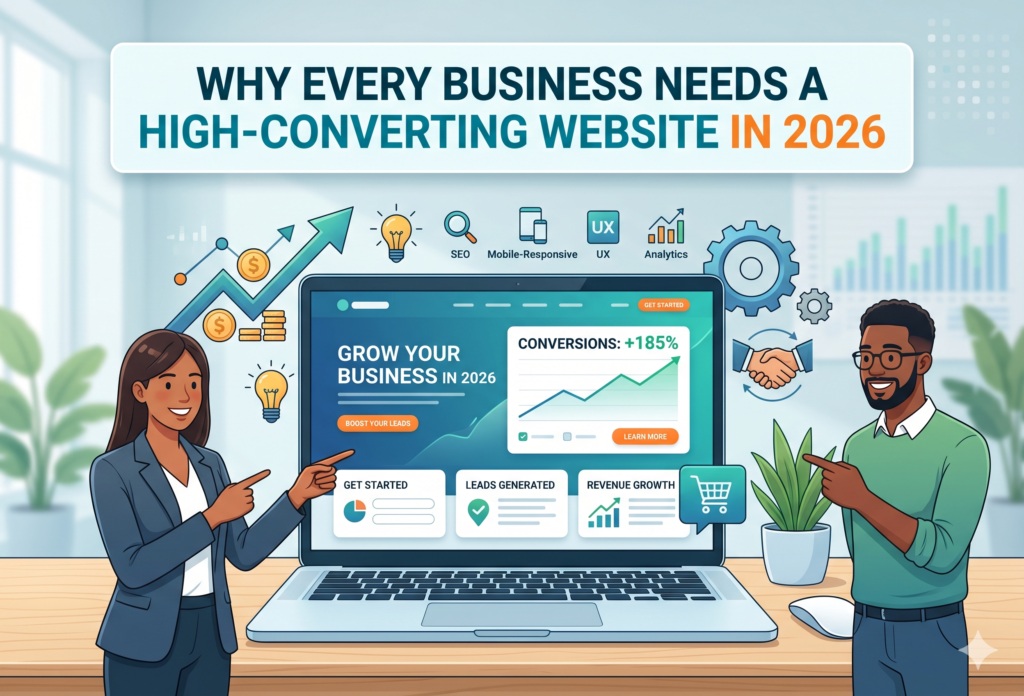
Why Every Business Needs a High-Converting Website in 2026

In 2026, having a social media presence alone is no longer enough to grow a successful business. Modern consumers research brands online before making purchasing decisions, and the first place they often visit is a company’s website. Whether a customer discovers your business through Google Search, Facebook, Instagram, YouTube, online advertisements, or referrals, they want a reliable source of information before taking the next step. A professional, high-converting website serves as the foundation of your online presence. It helps establish credibility, attract qualified leads, increase sales, and provide customers with valuable information whenever they need it. Unlike social media platforms, a website gives your business complete ownership and control over its online presence, allowing you to manage content, branding, and customer interactions without depending on third-party platforms.  If your business wants to remain competitive, generate consistent leads, and build long-term growth, investing in a high-converting website is no longer optional—it’s essential. Start Your Website Project What Is a High-Converting Website? A high-converting website is designed with a specific goal: turning visitors into customers. Instead of simply displaying information, it encourages users to take meaningful actions such as: Contacting your business Requesting a quote Booking a consultation Filling out a lead form Purchasing a product Scheduling an appointment Subscribing to a newsletter A website that receives traffic but fails to generate inquiries or sales is merely an online brochure. A high-converting website, on the other hand, functions as a powerful business growth tool that actively contributes to your revenue. Why Having a Professional Website Is Essential for Business Growth in 2026 Start Your Website Project Unlike traditional brick-and-mortar stores that operate during fixed business hours, your website works around the clock. Potential customers can: Learn about your products and services Browse your portfolio Read customer reviews Submit inquiries Request quotations Make purchases Whether it’s during the day, late at night, or on weekends, your website continues serving potential customers and generating leads. This continuous availability gives businesses a significant competitive advantage in today’s digital marketplace. 2. A Well-Designed Website Strengthens Customer Trust and Enhances Brand Credibility Business A Professional website Service pages Testimonials Portfolio Contact information Business B Only a social media profile Most customers will naturally trust Business A. A professional website signals legitimacy, professionalism, and commitment to customer service. It reassures visitors that your business is established and trustworthy. In many industries, customers may not even consider contacting a business that lacks a professional website. 3. Websites Improve Google Search Visibility Every day, millions of people search Google for products and services. Without a website, your business misses valuable opportunities to appear in search results when customers are actively looking for solutions. A properly optimized website helps your business: Rank for target keywords Appear in local search results Increase online visibility Generate qualified traffic Reach potential customers Search engine optimization (SEO) combined with a high-converting website creates a sustainable lead generation system that works long term. 4. Generate Free Organic Traffic Through SEO One of the biggest advantages of having a website is the ability to attract organic traffic. Unlike paid advertising, where traffic stops as soon as the budget runs out, SEO can continue generating visitors for months or even years. When your website ranks for relevant search terms, it can attract: Potential customers Industry-specific traffic Local search users Qualified leads Purchase-ready visitors This makes SEO one of the most cost-effective digital marketing strategies available to businesses in 2026. 5. Reduce Dependence on Social Media Platforms Many businesses rely heavily on social media for visibility and customer acquisition. While platforms such as Facebook, Instagram, LinkedIn, and TikTok can be valuable marketing channels, they come with risks: Algorithm changes Reduced organic reach Account restrictions Platform policy updates Increasing advertising costs The reality is simple: you don’t own social media platforms. Your website is an asset that belongs entirely to your business. A website allows you to customize every aspect of your brand’s online experience, from content and design to customer engagement and conversions.  A website ensures that your online presence remains stable regardless of changes in social media platforms. 6. Improve Customer Experience Today’s customers expect fast and convenient access to information. A professional website allows visitors to quickly find: Services Pricing information Business hours Contact details FAQs Product descriptions Customer reviews When customers can easily access information, they are more likely to trust your business and take action. A positive user experience directly impacts conversion rates and customer satisfaction. 7. Enable Online Payments and Business Automation Modern consumers value convenience. Modern websites can streamline and automate various business operations, helping companies save time and improve efficiency through features such as: Appointment scheduling Lead generation Customer inquiries Online payments Product orders Service bookings Automation reduces manual work while improving efficiency and customer satisfaction. For eCommerce businesses, a website becomes the primary sales platform. For service-based businesses, it serves as an automated lead generation system. 8. Strengthen Your Brand Identity Social media platforms offer limited branding opportunities. A website allows complete control over: Design Colors Messaging User experience Customer journey Content strategy A professionally designed website helps create a memorable brand experience and differentiates your business from competitors. Consistent branding improves recognition and builds stronger relationships with customers. 9. Support Digital Marketing Campaigns Every digital marketing strategy performs better when supported by a professional website. Your website acts as the destination for: Google Ads campaigns Facebook Ads Instagram Ads Email marketing Content marketing SEO campaigns Without an optimized website, advertising campaigns often generate poor results because visitors have nowhere effective to convert. A high-converting website ensures your marketing investment produces measurable returns. 10. Future-Proof Your Business Technology and consumer behavior continue to evolve. However, businesses will always need a central online hub that they control. A website supports long-term growth by providing a foundation for: SEO Lead generation Online sales Content marketing Customer engagement Marketing automation Businesses that invest in strong digital assets today will be better positioned for future success. Essential Features of a High-Converting Website Mobile-Friendly Design

Doon Memories Case Study
Casestudy

Transforming Doon Memories from an Offline Business to a Strong Digital Brand

Transforming Doon Memories from an Offline Business to a Strong Digital Brand Client Overview Doon Memories started as a completely offline business with little to no online presence. Despite offering quality products and services, the brand was missing out on a large audience that was actively searching online. The goal was simple: establish a strong digital presence, increase brand visibility, generate qualified leads, and create sustainable long-term growth. Over the last 5 years, we have worked closely with Doon Memories to build and scale their digital marketing ecosystem from the ground up. The Challenge When we started working with Doon Memories: No significant online presence Limited brand awareness outside offline channels No optimized Google Business Profile No structured lead generation system No SEO strategy in place No customer retention marketing Heavy dependency on offline business The business had great potential, but it needed a complete digital transformation strategy. 1. Google Business Profile (GMB) Our first recommendation was to establish and optimize their Google Business Profile (formerly Google My Business). Actions Taken Complete profile optimization Business information setup Service and product listings Review management strategy Local SEO optimization Regular updates and posts Result Increased local visibility Better presence in Google Maps Improved local search rankings More calls, directions, and inquiries from nearby customers 2. E-Commerce Website Design & Online Sales Growth As Doon Memories expanded its offerings of customized cakes, personalized gifts, hampers, and celebration products, we identified the need for a dedicated eCommerce website that could showcase products professionally and provide a seamless ordering experience for customers. We designed and developed a custom eCommerce platform focused on user experience, mobile accessibility, and online sales growth. Website Features Implemented Customized cake product pages Personalized gift showcase sections Category-wise product organization Mobile-responsive design WhatsApp ordering integration Easy inquiry and order forms SEO-friendly website structure Fast-loading pages Conversion-focused design Business Impact The website helped Doon Memories: Establish a professional online presence Showcase customized cakes and gift products effectively Improve customer experience Increase online inquiries and orders Expand reach beyond local customers Create a scalable online sales channel To maximize the website’s performance, we later integrated it with our SEO, Google Ads, Meta Ads, WhatsApp Marketing, and Email Marketing strategies, creating a complete digital ecosystem that supported long-term business growth. Results Achieved Professional eCommerce presence established Improved product visibility Increased online inquiries Better customer engagement Higher conversion opportunities Stronger online sales growth 3. Google Ads To accelerate visibility and generate immediate results, we launched targeted Google Ads campaigns. Objectives Increase local brand awareness Generate qualified leads Drive website and profile traffic Improve conversion opportunities Result Higher local reach Increased customer inquiries Better visibility in relevant searches Faster acquisition of potential customers 4. Meta Ads for Brand Awareness Once the local foundation was established, we expanded the strategy through Facebook and Instagram advertising. Campaign Objectives Build brand awareness Reach new audiences Increase engagement Strengthen brand recognition Strategies Used Awareness campaigns Audience targeting Interest-based campaigns Creative testing and optimization Result Significant increase in brand awareness Stronger social media presence Higher audience engagement Increased trust and recognition 5. WhatsApp Marketing & Retargeting Generating leads is only one part of growth. Converting and nurturing them is equally important. We implemented a WhatsApp marketing strategy to engage both new and existing customers. Activities Lead nurturing campaigns Customer support communication Promotional broadcasts Retargeting interested prospects Re-engaging inactive customers Result Improved customer engagement Faster communication Better lead conversion rates Higher customer retention 6. Email Marketing for Customer Retention Using the existing customer database, we launched email marketing campaigns to strengthen customer relationships. Objectives Retain existing customers Promote repeat purchases Share updates and offers Increase customer lifetime value Result Better customer retention Increased repeat business Improved customer loyalty Stronger brand relationship 7. SEO for Long-Term Organic Growth While paid advertising delivered immediate results, we knew that sustainable growth required organic visibility. That is why we recommended a comprehensive SEO strategy. SEO Activities Keyword research On-page optimization Technical SEO improvements Content optimization Local SEO enhancement Link-building strategy   Results Worked on 100+ target keywords Ranked multiple keywords on the first page of Google Improved search engine visibility Increased organic traffic Generated long-term inbound leads Unlike paid ads, SEO continues to bring traffic and potential customers even when advertising campaigns are paused. Keyword Ranking Result Cake in Dehradun Designer Cake in Dehradun Photo Cakes in Dehradun Birthday Cake Dehradun Customised Cake in Dehradun Best Cake Delivery in Dehradun Results Achieved Through a combination of: Google Business Profile Optimization Google Ads Meta Ads WhatsApp Marketing Email Marketing Search Engine Optimization Doon Memories successfully transformed from an offline business into a digitally visible and lead-generating brand. Key Outcomes Strong online presence Improved local visibility Increased brand awareness Better customer engagement Consistent lead generation Higher organic traffic First-page rankings for multiple keywords Sustainable long-term growth Conclusion Over the last five years, we have worked closely with Doon Memories to build a complete digital ecosystem that includes Google Business Profile optimization, Google Ads, Meta Ads, WhatsApp Marketing, Email Marketing, Search Engine Optimization, and eCommerce website development and marketing. Through a combination of paid advertising, organic growth strategies, customer retention campaigns, and online sales enablement, Doon Memories successfully transformed from a purely offline business into a strong digital brand with consistent traffic, quality leads, and growing online visibility. This project has been a valuable learning experience for our team, helping us develop new strategies, test innovative marketing approaches, and better understand how to drive measurable business growth for our clients. This is Part 1 of the Doon Memories Growth Case Study. Part 2 will include detailed growth metrics, campaign insights, and advanced strategies that contributed to the brand’s continued success.

Digital Brand Visibility in AI Search
Casestudy, BLOG

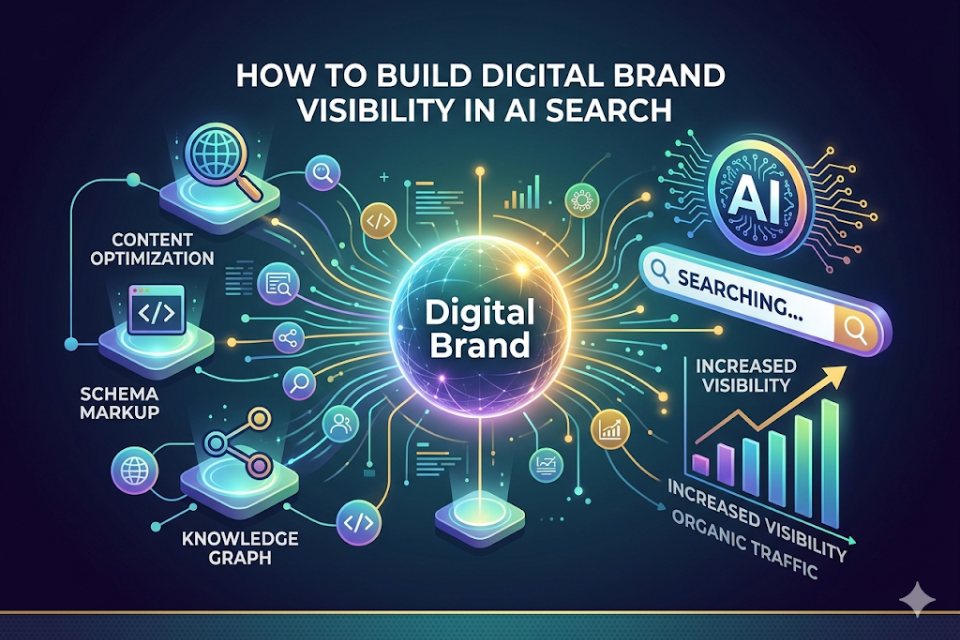
How to Build Digital Brand Visibility in AI Search

How to Build Digital Brand Visibility in AI Search   Artificial Intelligence is rapidly changing the way people search online. Instead of scrolling through multiple websites, users are now asking AI-powered platforms like ChatGPT, Google AI Overviews, Gemini, Perplexity, and Microsoft Copilot for direct answers, recommendations, and solutions. Because of this shift, businesses must rethink their SEO strategies and focus on improving digital brand visibility in AI search. Traditional SEO is no longer enough. Brands that want to stay visible in 2026 and beyond need content that AI systems can understand, trust, and recommend. In this guide, you’ll learn practical strategies to increase your brand visibility in AI-powered search engines and stay ahead of the competition. Get Help Your Business By Abhishek Singh Bartwal What Is AI Search? AI search refers to search experiences powered by artificial intelligence and machine learning. Instead of simply showing a list of links, AI search engines provide direct answers, summaries, and recommendations based on user intent. Examples of AI-powered search platforms include: Google AI Overviews ChatGPT Perplexity AI Microsoft Copilot Gemini AI These platforms analyze web content, authority signals, user behavior, and semantic relevance to generate responses. This means businesses now need to optimize content differently to improve digital brand visibility in AI search. You can also read : How Businesses Can Rank in AI Search in 2026: Complete Guide   Why Digital Brand Visibility in AI Search Matters AI search is changing how users discover brands online. If your business is not visible in AI-generated answers, you may lose traffic, authority, and potential customers. Here’s why it matters: 1. AI Gives Direct Recommendations Users increasingly trust AI-generated recommendations for products, services, and information. 2. Zero-Click Searches Are Increasing Google AI Overviews often answer user queries without requiring clicks to websites.     3. Brand Mentions Build Trust When AI tools repeatedly mention your brand, it strengthens authority and recognition. 4. AI Search Influences Buying Decisions Consumers now use AI assistants for: Product comparisons Local recommendations Service research Reviews and insights Improving digital brand visibility in AI search helps businesses stay discoverable where users are actively searching. You can also read : SEO vs Paids: Which Marketing Strategy Gives Better ROI in 2026?   How AI Search Engines Choose Which Brands to Recommend AI search systems do not randomly select brands. They evaluate multiple trust and authority signals across the internet. Key factors include: Website authority High-quality backlinks EEAT signals (Experience, Expertise, Authority, Trustworthiness) Fresh and relevant content Positive reviews Brand mentions on trusted websites Structured data and schema markup User engagement signals Brands that consistently provide valuable and trustworthy content are more likely to appear in AI-generated answers. Strategies to Build Digital Brand Visibility in AI Search 1. Create High-Quality EEAT Content   Google and AI systems prioritize content that demonstrates expertise and trustworthiness. To improve EEAT: Publish detailed guides Add expert insights Use real-world examples Include author bios Keep content updatedregularly Helpful, experience-driven content increases your chances of improving digital brand visibility in AI search. 2. Optimize for Conversational Search Queries People interact with AI search differently than traditional search engines. They use natural language questions. Example: Instead of: “best SEO tools” Users ask: “What are the best SEO tools for small businesses in 2026?” Tips: Use question-based headings Add conversational phrases Include long-tail keywords Write naturally for humans first This helps AI models better understand and surface your content. 3. Build Strong Brand Authority Across the Web AI platforms gather information from multiple trusted sources. Improve your authority through: Guest posting PR mentions Industry directories Podcasts LinkedIn articles Quora and Reddit participation The more trusted mentions your brand receives, the stronger your digital brand visibility in AI search becomes. 4. Use Structured Data and Schema Markup Schema markup helps AI and search engines understand your content better. Important schema types include: FAQ Schema Organization Schema Article Schema Review Schema Structured data improves content clarity and increases the chances of appearing in AI-generated summaries. 5. Focus on Semantic SEO Modern AI search relies heavily on semantic understanding instead of exact-match keywords. Semantic SEO includes: Topic clusters Internal linking Related entities Contextual relevance Instead of targeting a single keyword repeatedly, cover related topics naturally. For example, alongside digital brand visibility in AI search, include related terms like: AI SEO strategy AI-powered search engines Generative AI optimization AI search visibility 6. Create AI-Friendly Content Formats AI systems prefer content that is easy to scan and summarize. Best-performing formats: Step-by-step guides FAQs Bullet points Tables Definitions Comparison articles Well-structured content improves readability for both users and AI models. 7. Improve Technical SEO Technical optimization remains essential for AI visibility. Important technical SEO factors: Fast loading speed Mobile responsiveness HTTPS security Crawlable website structure Clean URLs Optimized metadata A technically strong website supports better indexing and visibility in AI search systems. 8. Leverage Social Media and Digital PR AI models often analyze web-wide popularity signals. Strong platforms for brand visibility: LinkedIn YouTube Twitter/X Medium Industry publications Consistent content distribution helps strengthen your online authority and improves digital brand visibility in AI search over time. Common Mistakes to Avoid Many brands struggle with AI visibility because they make avoidable SEO mistakes. Avoid: Thin AI-generated spam content Keyword stuffing Outdated information Poor user experience Lack of backlinks Ignoring EEAT principles Search engines and AI systems prioritize value, trust, and user satisfaction. Contact Us The Future of AI Search and Brand Visibility AI search is still evolving rapidly. Businesses that adapt early will gain a major competitive advantage. Future trends may include: More personalized AI search results Voice-based AI search growth Increased zero-click experiences AI shopping assistants Predictive recommendations Brands that invest in content quality, authority, and user experience will continue to improve their digital brand visibility in AI search. Conclusion The search landscape is changing faster than ever. AI-powered search engines are transforming how users discover brands, consume information, and make decisions online. To succeed in this new era, businesses must focus on creating trustworthy, valuable, and

Rank in AI Search
Casestudy, BLOG

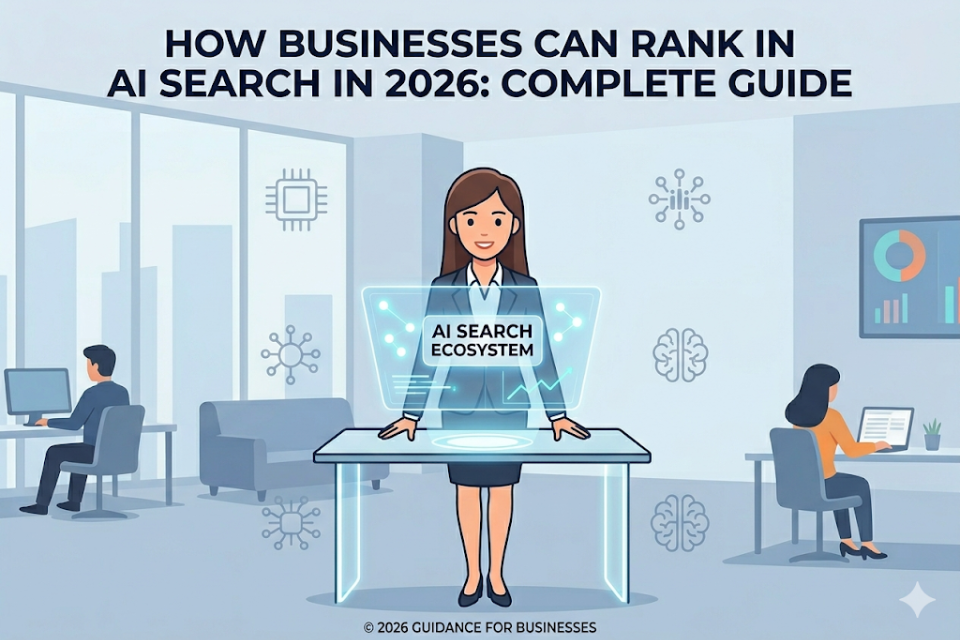
How Businesses Can Rank in AI Search in 2026: Complete Guide

How Businesses Can Rank in AI Search in 2026: Complete Guide The way people search online is changing faster than ever. Traditional search engines are evolving, and artificial intelligence is becoming a major part of how users discover information. Instead of simply showing a list of website links, AI-powered search experiences now generate summaries, recommendations, and direct answers. For businesses, this shift creates both opportunities and challenges. Companies that adapt early can gain a competitive advantage, while those relying only on traditional SEO methods may struggle to maintain visibility. If your goal is to Rank in AI Search, understanding how AI systems evaluate and recommend content has become essential in 2026. Unlike conventional SEO, AI search focuses heavily on content quality, context, trust, and user intent. Businesses now need strategies that help search systems understand not only keywords but also the complete meaning and value behind their content. Get Help Your Busniess By Abhishek Singh Bartwal  Understanding  the Rise of AI Search AI Search refers to search experiences powered by artificial intelligence technologies that analyze user intent and generate smarter results. Rather than relying only on keyword matching, AI systems evaluate context, relevance, and relationships between topics. Modern users increasingly prefer conversational search behavior. They ask complete questions and expect immediate answers. This means businesses must move beyond keyword-heavy pages and create content designed around real user needs. As AI-driven platforms continue to evolve, brands that create clear, authoritative, and helpful content are more likely to Rank in AI Search and improve their digital visibility. You can also read : SEO vs Paids: Which Marketing Strategy Gives Better ROI in 2026? Why Traditional SEO Alone Is No Longer Enough (And How to Rank in AI Search) Let’s be honest: the old SEO playbook is gathering dust. There was a time when you could “game” the system by sprinkling keywords across a page and buying a few links. But today? The search bar has evolved into a conversation engine. If you want to stay visible, you need to understand that the goal isn’t just to rank on page one anymore—it’s to Rank in AI Search. 1. From “Keywords” to “Conversations” Traditional SEO taught us to target phrases like “best coffee maker.” But AI engines like ChatGPT, Perplexity, and Google’s SGE (Search Generative Experience) don’t just look for those words. They look for the answer. To Rank in AI Search, your content needs to be structured as a solution to a problem. AI models prioritize “Entities”—the relationships between people, places, and facts. If your content is thin or repetitive, AI will simply skip over you. 2. The Death of the “Blue Link” We used to fight for the top blue link. Now, AI often summarizes the top results into a single paragraph at the very top of the page. This is a “Zero-Click” world. The Strategy: You need to be the source that the AI cites. How? Use clear, authoritative data and “Information Gain”—tell the reader something they haven’t heard a thousand times before. 3. Experience is the New Authority (EEAT) AI can aggregate facts, but it can’t tell you how a product felt in its hands or what it’s like to run a business for ten years. This is your secret weapon. Google and other AI-driven platforms are obsessed with Experience. To Rank in AI Search, you must include: Personal anecdotes. Real-world case studies. Original photos or unique data points. A “human” voice that shows there’s a real person behind the screen. 4. The “Search” is Everywhere People are searching on TikTok, YouTube, and Reddit. Traditional SEO often ignores these silos. But AI models are trained on this data. If people are talking about your brand on Reddit or watching your tutorials on YouTube, you are much more likely to Rank in AI Search because the AI recognizes you as a trusted authority across the entire web. The 2026 Checklist: How to Pivot If you want to move beyond basic SEO and actually dominate the new era of search, here is your roadmap: Stop Writing for Bots: If a human finds your article boring, an AI will find it useless. Write with personality. Answer the “Why” and “How”: Don’t just provide a list of facts. Explain the nuance. Optimize for Snippets: Use clear headings and concise summaries. AI loves to “scrape” well-organized data. Build a Brand, Not Just a Site: Authority comes from being mentioned in multiple places, not just having a fast website. Build Strong Topic Authority   One of the most effective ways to Rank in AI Search is by building topical authority. Instead of publishing isolated pages around individual keywords, businesses should create content ecosystems around related subjects. For example, a digital marketing consultant should not only publish content about SEO services. Supporting content around AI marketing trends, local SEO, content strategies, search updates, and case studies helps establish expertise. When search systems see comprehensive coverage around a topic, they gain stronger confidence in your website as a reliable source. You can also read : Milesweb coupon code – Discount code   Create Helpful and Experience-Based Content   Content quality matters more than ever. Businesses should focus on creating information that reflects real-world knowledge and practical insights. Generic articles often fail because they repeat information already available online. Content becomes stronger when it includes examples, observations, practical advice, and industry insights. Businesses that consistently publish original and useful information improve their chances to Rank in AI Search because AI systems prioritize value and relevance. Improve Content Structure and Readability   Content structure plays an important role in AI visibility. Well-organized information is easier for both users and AI systems to understand. Simple formatting practices can improve readability significantly: Use descriptive headings Keep paragraphs short Add bullet points where needed Use relevant subheadings Maintain logical content flow Include FAQs at the end A clean structure helps search systems understand relationships between sections and extract useful information more effectively. Technical SEO Still Supports AI Visibility   While content strategy

seovspaids
Casestudy, BLOG

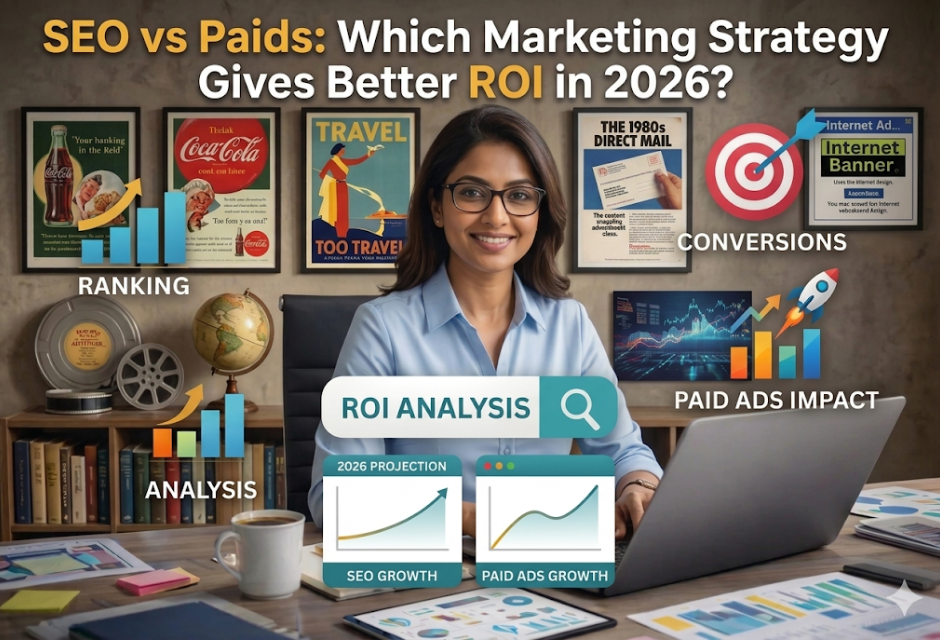
SEO vs Paids: Which Marketing Strategy Gives Better ROI in 2026?

SEO vs Paids: Which Marketing Strategy Gives Better ROI in 2026? Every business wants more traffic, better leads, and higher sales. But when it comes to digital marketing, one question always creates confusion — SEO vs Paids, which strategy actually gives better ROI?  Some businesses invest heavily in SEO to build long-term organic traffic, while others rely on paid ads for instant visibility and faster conversions. Both strategies work, but they deliver results in very different ways. If you’re trying to decide where to spend your marketing budget, this guide will help you understand the real difference between SEO vs Paids, their benefits, costs, and which strategy can help your business grow faster in 2026. Get Help your Business By Abhishek Singh Bartwal What is SEO? SEO (Search Engine Optimization) is the process of improving your website so it ranks higher on Google organically. Instead of paying for every visitor, SEO helps you attract traffic naturally through search engines. When people search for products, services, or information related to your business, SEO helps your website appear in front of them. SEO includes: Keyword optimization Content creation Technical website improvements Backlink building Mobile optimization Better user experience The biggest advantage of SEO is that it continues generating traffic even after the content is published. You can also read :  Why Your Bakery Needs a Website Benefits of SEO Long-term organic traffic Higher brand trust Better online visibility Lower long-term marketing cost Sustainable business growth Challenges of SEO Takes time to show results Requires consistent effort High competition in some industries SEO is not a quick solution, but businesses that invest in it properly often see long-term growth and consistent traffic. What are Paid Ads? Paid ads are online advertisements where businesses pay platforms like Google, Facebook, or Instagram to promote their products or services. Unlike SEO, paid ads can start generating traffic almost immediately. Popular paid advertising platforms include: Google Ads Facebook Ads Instagram Ads LinkedIn Ads YouTube Ads With paid advertising, businesses can target specific audiences based on: Location Interests Age Search behavior Devices This makes paid ads one of the fastest ways to generate traffic and leads online. Benefits of Paid Ads Instant visibility Quick lead generation Advanced targeting options Faster campaign scaling Easy performance tracking Challenges of Paid Ads Requires continuous spending Traffic stops when ads stop Competitive keywords can be expensive Poor campaigns can waste money quickly Paid advertising works best for businesses that want immediate results. SEO vs Paids: Understanding the Main Difference   The biggest difference between SEO vs Paids is simple. SEO focuses on long-term organic growth, while paid ads focus on immediate traffic and faster conversions. Here’s a simple comparison: Factor SEO Paid Ads Traffic Source Organic Paid Results Speed Slow Instant Cost Long-term investment Pay per click Sustainability Long-lasting Stops with budget Brand Trust Higher Moderate ROI Duration Long-term Short-term When comparing SEO vs Paids, businesses need to decide whether they want fast results or long-term growth. SEO vs Paids: Which Gives Better ROI? ROI (Return on Investment) is one of the biggest factors businesses consider while choosing a marketing strategy. The truth is, both SEO and paid ads can deliver excellent ROI when used correctly. However, the results depend on your goals, industry, and marketing budget. Why SEO Delivers Strong Long-Term ROI SEO is often considered one of the best long-term digital marketing investments. Once your website starts ranking on Google, it can continue bringing traffic and leads for months or even years without paying for every click. For example: A well-optimized blog can generate traffic daily High-ranking pages build authority Organic visitors often trust websites more than ads Over time, SEO usually becomes more cost-effective compared to paid advertising. SEO Works Best For: Startups Bloggers Local businesses Service providers Long-term brands Businesses focused on long-term growth often prioritize SEO because it builds sustainable visibility online. Why Paid Ads Deliver Faster Results Paid ads are perfect for businesses that need traffic immediately. Unlike SEO, you don’t have to wait months for rankings. You can launch a campaign today and start receiving visitors within hours. Paid advertising is especially useful for: Product launches Seasonal offers E-commerce sales Lead generation campaigns Competitive industries The biggest advantage of paid ads is speed. However, there’s one important thing to remember: When your ad budget stops, your traffic usually stops too. That’s why businesses often compare SEO vs Paids carefully before investing heavily in one strategy. Contact Us Should You Choose SEO or Paid Ads?   The answer depends on your business goals. Choose SEO if: You want long-term traffic You want sustainable growth You want better brand authority You prefer lower long-term marketing costs Choose Paid Ads if: You need quick results You want immediate leads You’re launching a new product You need fast visibility Many businesses start with paid ads for instant traffic while building SEO gradually for long-term success. Why Combining SEO and Paid Ads is the Smartest Strategy The best digital marketing strategy is often not choosing between SEO vs Paids, but combining both together. SEO helps build long-term authority, while paid ads generate immediate traffic and conversions. Using both strategies together can help businesses: Increase overall visibility Generate more leads Improve conversion rates Build stronger brand awareness Maximize marketing ROI For example: Paid ads can bring quick traffic to new pages SEO can continue generating traffic long after ads stop running This balanced approach often delivers the best results. Common Mistakes Businesses Make Many businesses fail because they don’t understand how SEO vs Paids actually work. 1. Expecting Instant SEO Results SEO takes time and consistency. 2. Running Ads Without Proper Strategy Poor targeting and weak landing pages waste ad budgets. 3. Ignoring Keyword Research Keywords are important for both SEO and paid advertising. 4. Depending Only on One Strategy Using only SEO or only paid ads can limit growth potential. A smart marketing strategy usually combines both. Final Thoughts on SEO vs Paids The debate around SEO vs Paids

Casestudy

You’re Missing 80% of Local Customers Without This

You’re Missing 80% of Local Customers Without This Imagine this—your potential customers are searching for your services right now, just a few kilometres away… but they never find you. Instead, they end up choosing your competitor. Not because you’re not good enough, but because you’re invisible online. Sounds harsh? It’s the reality for businesses that ignore one powerful tool: Google My Business. What Is Google My Business & Why It Matters Google My Business (now known as Google Business Profile) is a free platform that helps your business appear in local search results, Google Maps, and “near me” searches. When someone searches for “best bakery near me” or “digital marketing agency “, Google shows a list of nearby businesses—this is where GMB plays a crucial role. If your business isn’t optimised or listed here, you’re literally missing out on a huge portion of ready-to-buy customers. Why You’re Losing 80% of Local Customers 1. You’re Not Showing in Local Searches Most users don’t go beyond the first page of Google. If your business isn’t listed on GMB, you won’t appear in the local 3-pack (top 3 results), which gets the majority of clicks. 2. No Trust Signals Customers trust businesses with reviews, ratings, photos, and updated information. Without a GMB profile, your business looks less credible compared to competitors. 3. Missed Mobile Traffic A huge percentage of local searches happen on mobile devices. Users want quick information—location, call button, directions—all of which GMB provides instantly. How Google My Business Drives Real Growth Increased Visibility Your business shows up in Google Maps and local search results, increasing your chances of being discovered. More Calls & Walk-ins With features such as “Call Now” and “Get Directions”, customers can instantly connect with your business. Better Conversion Rate People searching locally already have high intent. They’re not browsing—they’re ready to buy. Free Marketing Tool Unlike paid ads, GMB allows you to promote your business organically without spending money. How to Optimize Your GMB Profile Add accurate business details (name, address, phone) Upload high-quality images regularly Collect and respond to customer reviews Post updates, offers, and announcements Use relevant keywords in your description A well-optimised Google My Business profile can significantly boost your local rankings and customer engagement for your business. Final Thoughts If your business is not leveraging Google My Business, you’re leaving money on the table. In today’s digital-first world, visibility equals opportunity—and GMB is your gateway to capturing local demand. Consult the Best DM Consultant Today Want to rank your business on top of local searches and attract high-quality leads consistently? It’s time to take action. Partner with an expert who understands local SEO, GMB optimisation, and growth strategies tailored for your business. Consult the best digital marketing consultant  today and turn your local searches into real customers! FAQ 1. What is Google My Business, and why is it important? Google My Business helps your business appear in local search results and Google Maps, making it easier for nearby customers to find and contact you. 2. How does Google My Business help in getting more customers? An optimised Google My Business profile increases visibility, builds trust through reviews, and allows users to call or visit your business directly. 3. Is Google My Business free to use? Yes, Google My Business is completely free and acts as a powerful tool for local marketing without any advertising cost. 4. How can I optimise my Google My Business profile? You can optimise Google My Business by updating accurate business details, adding photos, collecting reviews, and posting regular updates. 5. Can Google My Business help my business rank higher on Google? Yes, a well-optimised Google My Business profile improves your chances of appearing in local search results and the top 3 listings (local pack).

Scroll to Top