
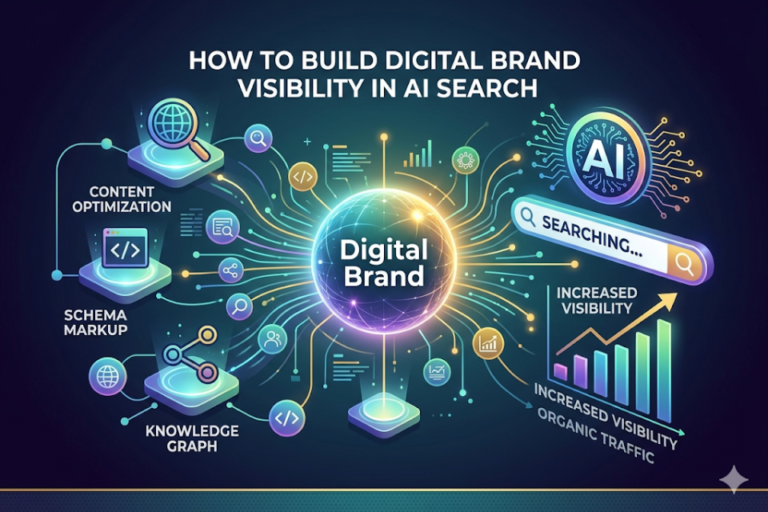
How to Build Digital Brand Visibility in AI Search
Artificial Intelligence is rapidly changing the way people search online. Instead of scrolling through multiple websites, users are now asking AI-powered platforms like ChatGPT, Google AI Overviews, Gemini, Perplexity, and Microsoft Copilot for direct answers, recommendations, and solutions. Because of this shift, businesses must rethink their SEO strategies and focus on improving digital brand visibility in AI search.
Traditional SEO is no longer enough. Brands that want to stay visible in 2026 and beyond need content that AI systems can understand, trust, and recommend. In this guide, you’ll learn practical strategies to increase your brand visibility in AI-powered search engines and stay ahead of the competition.
What Is AI Search?
AI search refers to search experiences powered by artificial intelligence and machine learning. Instead of simply showing a list of links, AI search engines provide direct answers, summaries, and recommendations based on user intent.
Examples of
AI-powered search platforms include:
Google AI Overviews
ChatGPT
Perplexity AI
Microsoft Copilot
Gemini AI
These platforms analyze web content, authority signals, user behavior, and semantic relevance to generate responses. This means businesses now need to optimize content differently to improve digital brand visibility in AI search.
You can also read : How Businesses Can Rank in AI Search in 2026: Complete Guide
Why Digital Brand Visibility in AI Search Matters
AI search is changing how users discover brands online. If your business is not visible in AI-generated answers, you may lose traffic, authority, and potential customers.
Here’s why it matters:
1. AI Gives Direct Recommendations
Users increasingly trust AI-generated recommendations for products, services, and information.
2. Zero-Click Searches Are Increasing
Google AI Overviews often answer user queries without requiring clicks to websites.
3. Brand Mentions Build Trust
When AI tools repeatedly mention your brand, it strengthens authority and recognition.
4. AI Search Influences Buying Decisions
Consumers now use AI assistants for:
Product comparisons
Local recommendations
Service research
Reviews and insights
Improving digital brand visibility in AI search helps businesses stay discoverable where users are actively searching.
You can also read : SEO vs Paids: Which Marketing Strategy Gives Better ROI in 2026?
How AI Search Engines Choose Which Brands to Recommend
AI search systems do not randomly select brands. They evaluate multiple trust and authority signals across the internet.
Key factors include:
Website authority
High-quality backlinks
EEAT signals (Experience, Expertise, Authority, Trustworthiness)
Fresh and relevant content
Positive reviews
Brand mentions on trusted websites
Structured data and schema markup
User engagement signals
Brands that consistently provide valuable and trustworthy content are more likely to appear in AI-generated answers.
Strategies to Build Digital Brand Visibility in AI Search
1. Create High-Quality EEAT Content
Google and AI systems prioritize content that demonstrates expertise and trustworthiness.
To improve EEAT:
Publish detailed guides
Add expert insights
Use real-world examples
Include author bios
Keep content updatedregularly
Helpful, experience-driven content increases your chances of improving digital brand visibility in AI search.
2. Optimize for Conversational Search Queries
People interact with AI search differently than traditional search engines. They use natural language questions.
Example:
Instead of:
“best SEO tools”
Users ask:
“What are the best SEO tools for small businesses in 2026?”
Tips:
Use question-based headings
Add conversational phrases
Include long-tail keywords
Write naturally for humans first
This helps AI models better understand and surface your content.
3. Build Strong Brand Authority Across the Web
AI platforms gather information from multiple trusted sources.
Improve your authority through:
Guest posting
PR mentions
Industry directories
Podcasts
LinkedIn articles
Quora and Reddit participation
The more trusted mentions your brand receives, the stronger your digital brand visibility in AI search becomes.
4. Use Structured Data and Schema Markup
Schema markup helps AI and search engines understand your content better.
Important schema types include:
FAQ Schema
Organization Schema
Article Schema
Review Schema
Structured data improves content clarity and increases the chances of appearing in AI-generated summaries.
5. Focus on Semantic SEO
Modern AI search relies heavily on semantic understanding instead of exact-match keywords.
Semantic SEO includes:
Topic clusters
Internal linking
Related entities
Contextual relevance
Instead of targeting a single keyword repeatedly, cover related topics naturally.
For example, alongside digital brand visibility in AI search, include related terms like:
AI SEO strategy
AI-powered search engines
Generative AI optimization
AI search visibility
6. Create AI-Friendly Content Formats
AI systems prefer content that is easy to scan and summarize.
Best-performing formats:
Step-by-step guides
FAQs
Bullet points
Tables
Definitions
Comparison articles
Well-structured content improves readability for both users and AI models.
7. Improve Technical SEO
Technical optimization remains essential for AI visibility.
Important technical SEO factors:
Fast loading speed
Mobile responsiveness
HTTPS security
Crawlable website structure
Clean URLs
Optimized metadata
A technically strong website supports better indexing and visibility in AI search systems.
8. Leverage Social Media and Digital PR
AI models often analyze web-wide popularity signals.
Strong platforms for brand visibility:
YouTube
Twitter/X
Medium
Industry publications
Consistent content distribution helps strengthen your online authority and improves digital brand visibility in AI search over time.
Common Mistakes to Avoid
Many brands struggle with AI visibility because they make avoidable SEO mistakes.
Avoid:
Thin AI-generated spam content
Keyword stuffing
Outdated information
Poor user experience
Lack of backlinks
Ignoring EEAT principles
Search engines and AI systems prioritize value, trust, and user satisfaction.
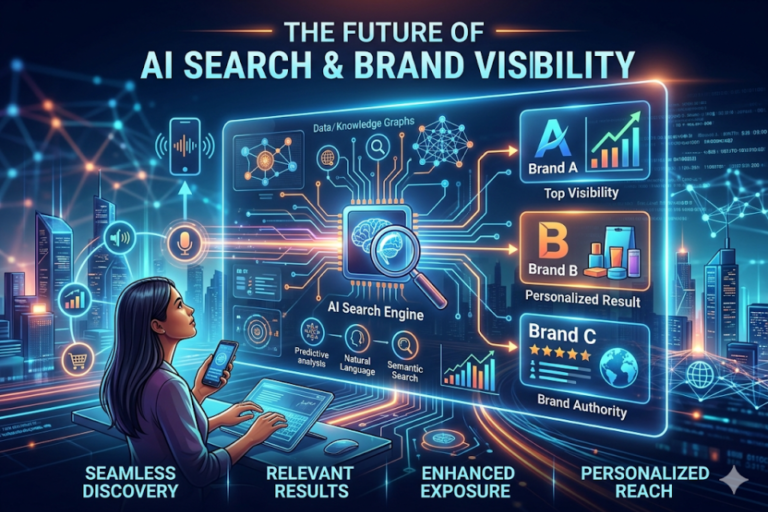
The Future of AI Search and Brand Visibility
AI search is still evolving rapidly. Businesses that adapt early will gain a major competitive advantage.
Future trends may include:
More personalized AI search results
Voice-based AI search growth
Increased zero-click experiences
AI shopping assistants
Predictive recommendations
Brands that invest in content quality, authority, and user experience will continue to improve their digital brand visibility in AI search.
Conclusion
The search landscape is changing faster than ever. AI-powered search engines are transforming how users discover brands, consume information, and make decisions online.
To succeed in this new era, businesses must focus on creating trustworthy, valuable, and well-structured content that AI systems can easily understand and recommend. From EEAT optimization and semantic SEO to structured data and brand authority building, every strategy plays a role in improving digital brand visibility in AI search.
Companies that start optimizing today will be better positioned to dominate AI-driven search results in the future.
F.A.Q.
Supporting Subheading
Digital brand visibility in AI search refers to how easily your business or brand appears in AI-generated answers, recommendations, and search summaries on platforms like ChatGPT, Google AI Overviews, and Perplexity.
You can improve visibility by creating high-quality content, optimizing for conversational queries, using schema markup, building backlinks, and increasing online brand authority.
Yes. Traditional SEO remains important, but businesses now also need semantic optimization, EEAT signals, and AI-friendly content formatting.
EEAT helps AI systems determine whether your content is trustworthy and authoritative. Strong EEAT signals improve the chances of your brand being recommended in AI-generated responses.
Yes. Small businesses can improve digital brand visibility in AI search by publishing expert content, targeting niche topics, and building online authority consistently.
Toggle Content
