
In 2026, having a social media presence alone is no longer enough to grow a successful business. Modern consumers research brands online before making purchasing decisions, and the first place they often visit is a company’s website. Whether a customer discovers your business through Google Search, Facebook, Instagram, YouTube, online advertisements, or referrals, they want a reliable source of information before taking the next step.
A professional, high-converting website serves as the foundation of your online presence. It helps establish credibility, attract qualified leads, increase sales, and provide customers with valuable information whenever they need it. Unlike social media platforms, a website gives your business complete ownership and control over its online presence, allowing you to manage content, branding, and customer interactions without depending on third-party platforms.
If your business wants to remain competitive, generate consistent leads, and build long-term growth, investing in a high-converting website is no longer optional—it’s essential.
What Is a High-Converting Website?
A high-converting website is designed with a specific goal: turning visitors into customers.
Instead of simply displaying information, it encourages users to take meaningful actions such as:
- Contacting your business
- Requesting a quote
- Booking a consultation
- Filling out a lead form
- Purchasing a product
- Scheduling an appointment
- Subscribing to a newsletter
A website that receives traffic but fails to generate inquiries or sales is merely an online brochure. A high-converting website, on the other hand, functions as a powerful business growth tool that actively contributes to your revenue.
Why Having a Professional Website Is Essential for Business Growth in 2026
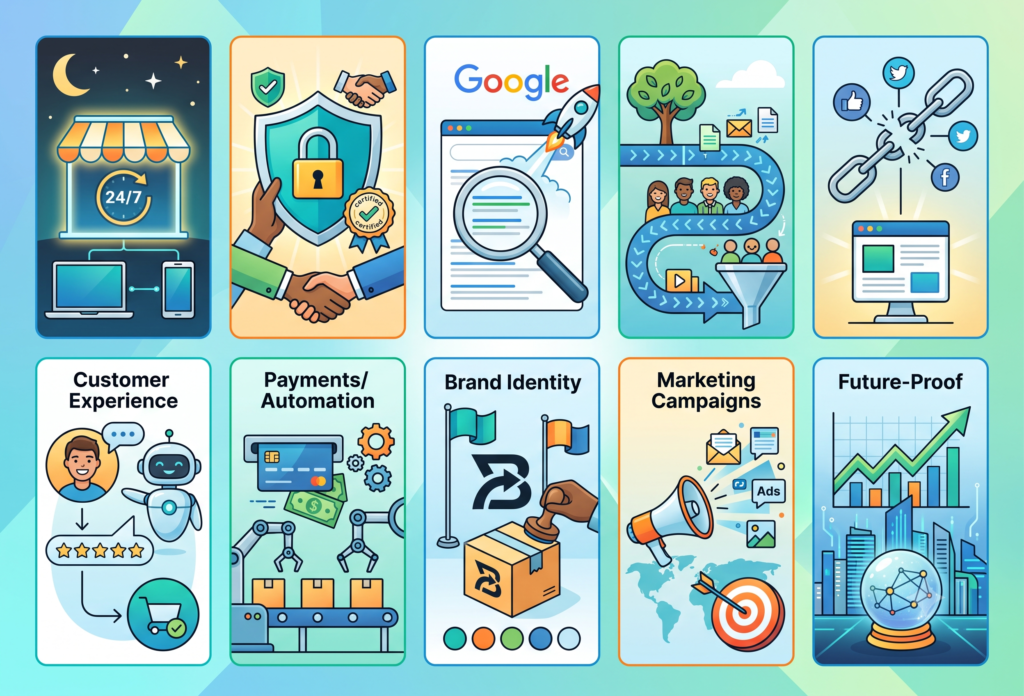
Unlike traditional brick-and-mortar stores that operate during fixed business hours, your website works around the clock.
Potential customers can:
- Learn about your products and services
- Browse your portfolio
- Read customer reviews
- Submit inquiries
- Request quotations
- Make purchases
Whether it’s during the day, late at night, or on weekends, your website continues serving potential customers and generating leads.
This continuous availability gives businesses a significant competitive advantage in today’s digital marketplace.
2. A Well-Designed Website Strengthens Customer Trust and Enhances Brand Credibility
Business A
- Professional website
- Service pages
- Testimonials
- Portfolio
- Contact information
Business B
- Only a social media profile
Most customers will naturally trust Business A.
A professional website signals legitimacy, professionalism, and commitment to customer service. It reassures visitors that your business is established and trustworthy.
In many industries, customers may not even consider contacting a business that lacks a professional website.
3. Websites Improve Google Search Visibility
Every day, millions of people search Google for products and services.
Without a website, your business misses valuable opportunities to appear in search results when customers are actively looking for solutions.
A properly optimized website helps your business:
- Rank for target keywords
- Appear in local search results
- Increase online visibility
- Generate qualified traffic
- Reach potential customers
Search engine optimization (SEO) combined with a high-converting website creates a sustainable lead generation system that works long term.
4. Generate Free Organic Traffic Through SEO
One of the biggest advantages of having a website is the ability to attract organic traffic.
Unlike paid advertising, where traffic stops as soon as the budget runs out, SEO can continue generating visitors for months or even years.
When your website ranks for relevant search terms, it can attract:
- Potential customers
- Industry-specific traffic
- Local search users
- Qualified leads
- Purchase-ready visitors
This makes SEO one of the most cost-effective digital marketing strategies available to businesses in 2026.
5. Reduce Dependence on Social Media Platforms
Many businesses rely heavily on social media for visibility and customer acquisition.
While platforms such as Facebook, Instagram, LinkedIn, and TikTok can be valuable marketing channels, they come with risks:
- Algorithm changes
- Reduced organic reach
- Account restrictions
- Platform policy updates
- Increasing advertising costs
The reality is simple: you don’t own social media platforms.
Your website is an asset that belongs entirely to your business. A website allows you to customize every aspect of your brand’s online experience, from content and design to customer engagement and conversions.
A website ensures that your online presence remains stable regardless of changes in social media platforms.
6. Improve Customer Experience
Today’s customers expect fast and convenient access to information.
A professional website allows visitors to quickly find:
- Services
- Pricing information
- Business hours
- Contact details
- FAQs
- Product descriptions
- Customer reviews
When customers can easily access information, they are more likely to trust your business and take action.
A positive user experience directly impacts conversion rates and customer satisfaction.
7. Enable Online Payments and Business Automation
Modern consumers value convenience.
Modern websites can streamline and automate various business operations, helping companies save time and improve efficiency through features such as:
- Appointment scheduling
- Lead generation
- Customer inquiries
- Online payments
- Product orders
- Service bookings
Automation reduces manual work while improving efficiency and customer satisfaction.
For eCommerce businesses, a website becomes the primary sales platform.
For service-based businesses, it serves as an automated lead generation system.
8. Strengthen Your Brand Identity
Social media platforms offer limited branding opportunities.
A website allows complete control over:
- Design
- Colors
- Messaging
- User experience
- Customer journey
- Content strategy
A professionally designed website helps create a memorable brand experience and differentiates your business from competitors.
Consistent branding improves recognition and builds stronger relationships with customers.
9. Support Digital Marketing Campaigns
Every digital marketing strategy performs better when supported by a professional website.
Your website acts as the destination for:
- Google Ads campaigns
- Facebook Ads
- Instagram Ads
- Email marketing
- Content marketing
- SEO campaigns
Without an optimized website, advertising campaigns often generate poor results because visitors have nowhere effective to convert.
A high-converting website ensures your marketing investment produces measurable returns.
10. Future-Proof Your Business
Technology and consumer behavior continue to evolve.
However, businesses will always need a central online hub that they control.
A website supports long-term growth by providing a foundation for:
- SEO
- Lead generation
- Online sales
- Content marketing
- Customer engagement
- Marketing automation
Businesses that invest in strong digital assets today will be better positioned for future success.
Essential Features of a High-Converting Website
Mobile-Friendly Design
With the majority of online users accessing websites through smartphones and tablets, mobile-friendly design has become a critical factor for business success. Your website must provide a seamless mobile experience across all screen sizes.
Fast Loading Speed
Website speed directly impacts user experience and conversions. Slow-loading pages often cause visitors to leave before taking action.
Clear Call-to-Actions (CTAs)
Effective websites guide visitors toward specific actions with buttons such as:
- Contact Us
- Get a Free Consultation
- Request a Quote
- Book Now
- Buy Now
Trust Signals
Trust-building elements include:
- Customer testimonials
- Reviews
- Certifications
- Awards
- Case studies
- Security badges
These elements help reduce hesitation and increase conversions.
SEO-Friendly Structure
A website should be optimized for search engines through:
- Proper heading structure
- Keyword optimization
- Internal linking
- Meta tags
- Fast performance
- Mobile responsiveness
SEO-friendly websites attract more organic traffic and generate better long-term results.
Also Read: How to Build Digital Brand Visibility in AI Search
Common Website Mistakes Businesses Should Avoid
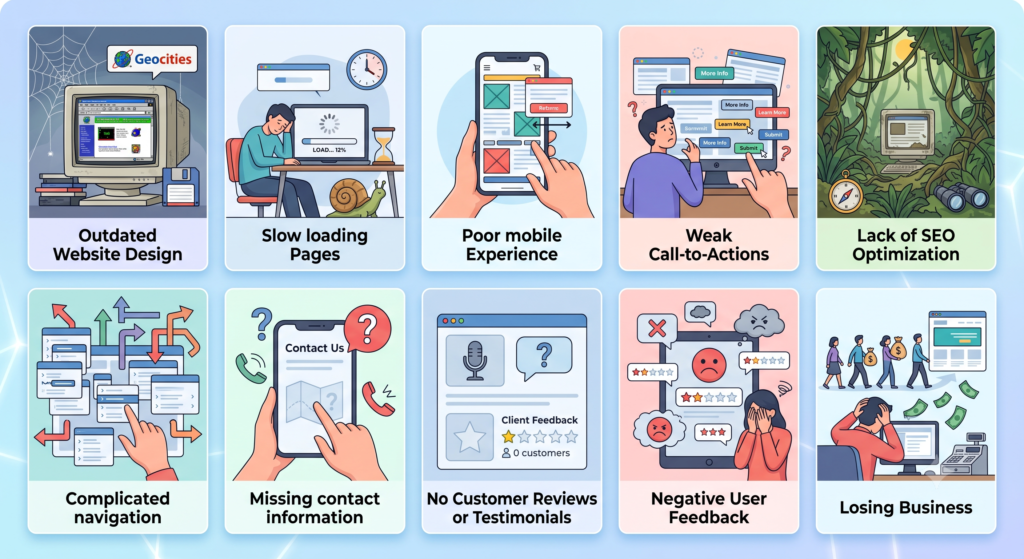
Many businesses lose potential customers because of avoidable website issues, including:
- Outdated website design
- Slow loading pages
- Poor mobile experience
- Weak call-to-actions
- Lack of SEO optimization
- Complicated navigation
- Missing contact information
- No customer reviews or testimonials
Addressing these problems can significantly improve website performance and conversion rates.
F.A.Q.
What makes a website high-converting?
A high-converting website is designed to encourage visitors to take specific actions such as contacting a business, requesting a quote, booking a consultation, or making a purchase.
Why is a website important for small businesses?
A website helps small businesses establish credibility, improve online visibility, attract customers through Google Search, and generate leads 24/7.
Can social media replace a business website?
No. Social media platforms help with visibility, but a website provides full control over branding, customer experience, and lead generation.
How does SEO help a website generate leads?
SEO improves a website’s visibility in search engines, helping businesses attract potential customers who are actively searching for their products or services.
How often should a business update its website?
Businesses should regularly update content, optimize for SEO, improve website performance, and keep information current to maintain rankings and conversions.